

by Buck Institute
May 7, 2026 . BLOG
Faces of Discovery:
Chaska Walton, PhD
(Part 2)
At the Buck, our breakthroughs are powered by people. Faces of Discovery, a monthly installment to the Buck Blog, introduces the scientists unraveling the mysteries of aging and pioneering ways to help us all live better longer.
This is the second of a 2-part interview with research scientist Chaska Walton, PhD. A member of Julie Andersen’s lab, Walton is the recipient of a $2.4 million NIH Transformative Research Award for his work on the development of smart delivery systems to treat multiple pathologies of Alzheimer’s disease. The NIH awarded only 9 such awards in the country. Walton received his PhD in molecular bioscience from CSIC/Autonomous University of Madrid. In part 1, Walton described what drew him to the field and the need for radically new approaches for treating Alzheimer’s disease. Here, Walton takes us into his work in the lab, and where he sees the field headed in the next 5-10 years. Read Part 1 here.
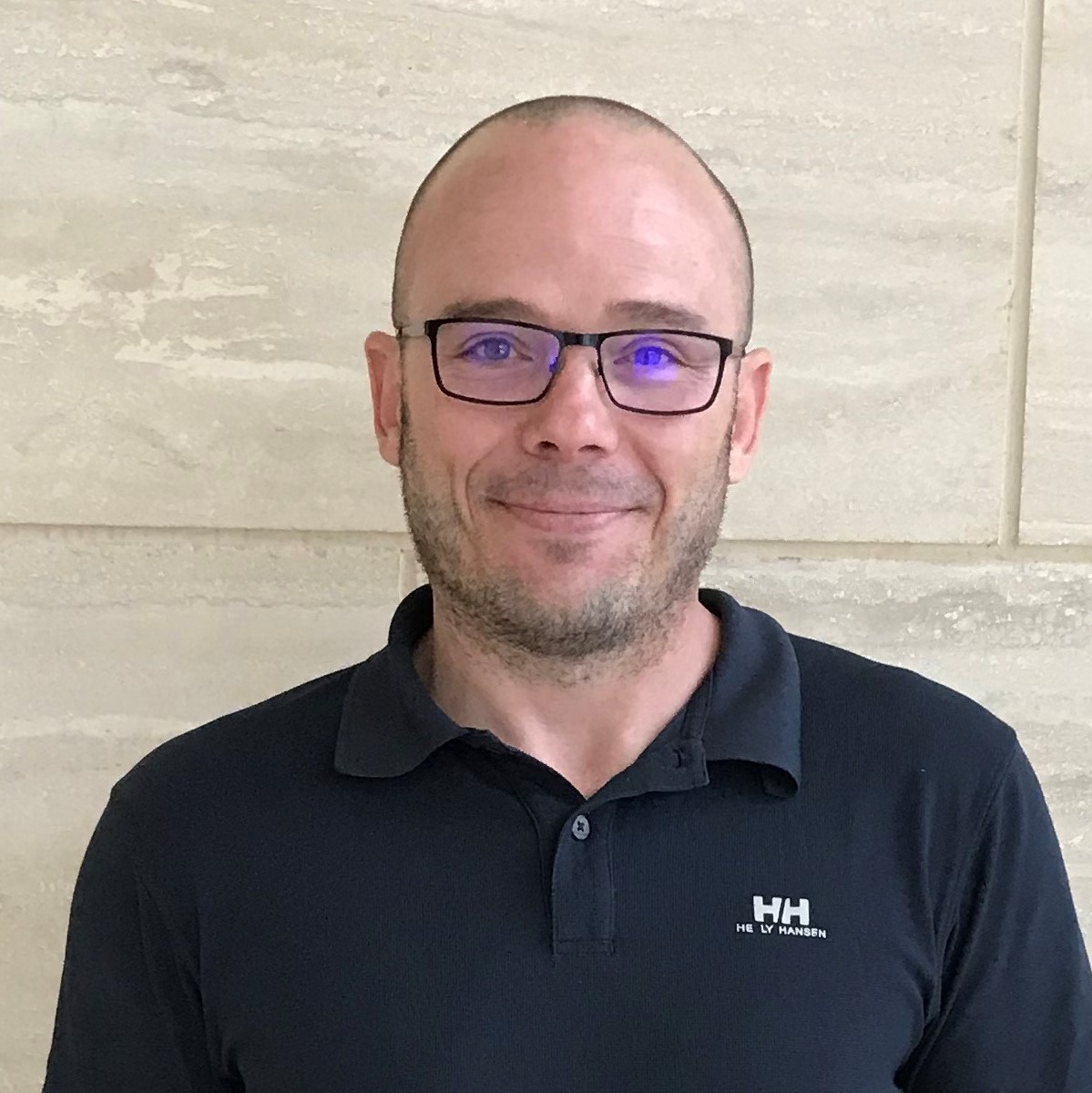
Chaska Walton’s scientific path has taken them from Barcelona to Madrid and now to California, following a curiosity about the brain that has evolved from fundamental neuroscience to engineering living therapies for neurodegenerative disease. After studying psychology and neuroscience at the Autonomous University of Barcelona, Chaska pursued doctoral work at the Cajal Institute in Madrid, where they challenged long-standing dogma by showing mature neurons can re-enter the cell cycle, a discovery inspired, in part, by Ramón y Cajal’s own vision that the “science of the future” might one day overturn even his harshest decrees. They later brought that spirit of reimagining biology to the Buck Institute, where their work has shifted from probing mechanisms of neuronal vulnerability and aging to designing synthetic immune-cell therapies for Alzheimer’s disease, including programmable CAR-Treg and smart cell delivery platforms. Driven by the belief that neurodegeneration is not an inevitable consequence of aging but a biological process we can interrogate, engineer, and ultimately change, Chaska’s research sits at the intersection of neuroscience, synthetic biology, and translational medicine. The only rule is that there are no rules.
Part 2 of 2
“Can you describe a recent experiment, breakthrough, or surprising finding in your work—and what it could mean for the future?”
A particularly remarkable breakthrough was realizing that we can genetically modify cells to detect amyloid beta senile plaques and, in response, produce and secrete the FDA-approved amyloid beta–clearing antibody Leqembi. This means cells can be engineered to act as mini physicians.
We are shrinking your doctor to about 20 nanometers and giving them superpowers. A physician will never be able to detect pathology as early as a cell can, because cells continuously scrutinize the body at the microscopic level. Your doctor has to wait until you are sick, by which time the disease has evolved for days, weeks, months, or even years, depending on the pathology. A physician will never be able to deliver a drug directly to a single cell, a level of precision that engineered cells achieve with ease. In a future where cells are the physicians, we will rethink the limits of medicine. We are taking the first steps toward that future.
“If you were explaining your research to a curious grandmother who hasn’t taken biology since high school, how would you describe it?”
We work on teaching living cells to act like tiny doctors inside the body. Normally, when we get sick, we rely on human doctors to detect disease and give us medicine. But doctors can only act once symptoms appear, and medicines spread throughout the body even where they are not needed. My research is about engineering certain immune cells so they can recognize very early signs of diseases like Alzheimer’s and release medicine exactly where it is needed and only when it is needed.
Another important part is that many complex diseases are not caused by just one problem. They are more like several problems happening at once. Current medicine usually treats only one of those problems at a time. The cells we engineer can be programmed to deliver multiple medicines together, like a combination treatment, so they can tackle several aspects of a disease at the same time.
You can think of it as giving the body a new internal repair crew that constantly patrols for problems, fixes them at their source, and stops working once the job is done. The goal is to catch disease much earlier, treat it more precisely, and make conditions that are currently considered incurable treatable in the future.
“How might your work eventually affect people’s everyday lives, health, or understanding of the world?”
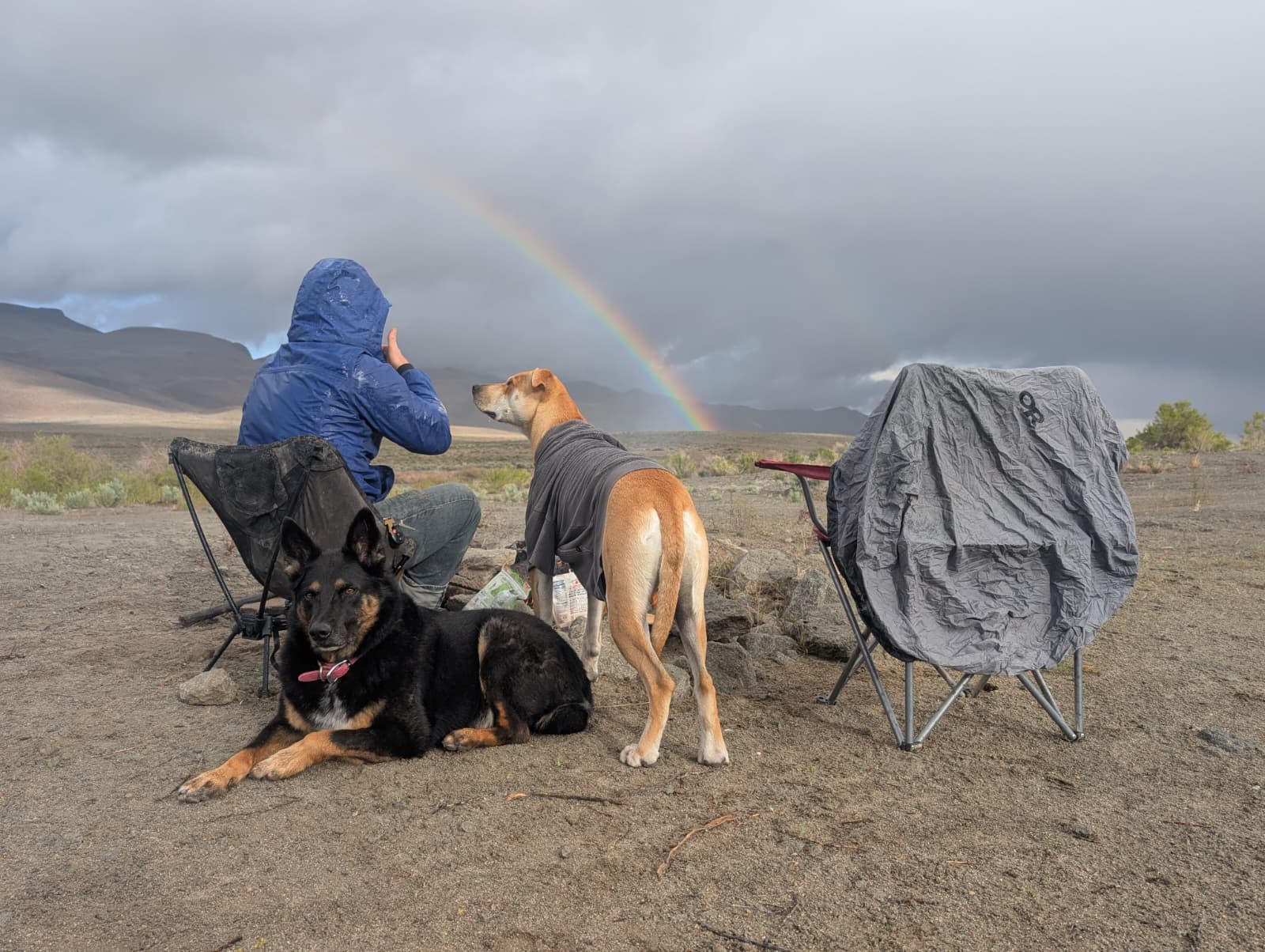
Fun car camping at the amazing Black Rock Desert, one of Chaska's favorite places to visit.
This approach to medicine will dramatically change what everyday health looks like. Today, we rely on physicians to detect disease after symptoms appear and to prescribe drugs that circulate through the whole body. In the future, we envision a secondary immune system that lives inside us for life. Much like our natural immune system, these engineered immune cells will continuously patrol the body, detect early signs of disease long before symptoms arise, and deliver therapeutic drugs precisely where they are needed. Because they are living cells, they can renew themselves, adapt, and remain active for years. Protection will come from within, not from periodic visits to a clinic.
This also means that the body itself will manufacture many of the drugs it needs. Instead of repeatedly buying expensive medications and receiving infusions or injections, therapeutic molecules will be produced on demand inside the body, exactly at the site of disease and only for as long as required. Treatment becomes a built-in function of the body rather than an external product.
As a result, many of the things physicians and hospitals do today will no longer be needed. Instead of diagnosing disease late and reacting to accumulated damage, medicine will become proactive and continuous. People will not need to visit hospitals nearly as often, nor rely on frequent imaging, blood tests, or repeated drug administration to manage chronic illness. Drugs will no longer flood the body and cause systemic side effects. They will be produced locally and precisely. We will be sick and cured without even knowing.
Looking Ahead
“What excites you most about where your field is heading in the next 5–10 years?”

The other thing Chaska loves doing... almost as much as science.
I believe that in the next five to ten years, work from pioneer laboratories like ours will begin to introduce a new idea into mainstream thinking: that the future of medicine lies in a secondary immune system engineered to cure disease. What excites me most is not only building this technology, but watching the concept itself take root. Seeing people realize that living inside the body could be a self-renewing therapeutic system that detects disease and responds automatically will fundamentally change how society thinks about health.
SHARE