

by Buck Institute
April 29, 2026 . BLOG
Faces of Discovery:
Chaska Walton, PhD
(Part 1)
At the Buck, our breakthroughs are powered by people. Faces of Discovery, a monthly installment to the Buck Blog, introduces the scientists unraveling the mysteries of aging and pioneering ways to help us all live better longer.
A member of Julie Andersen’s lab, Chaska Walton is the recipient of a $2.4 million NIH Transformative Research Award for his work on the development of smart delivery systems to treat multiple pathologies of Alzheimer’s disease. The NIH awarded only 9 such awards in the country. Walton received his PhD in molecular bioscience from CSIC/Autonomous University of Madrid. This is the first of a 2-part interview that explores a very fertile mind with big ideas for transforming healthcare.
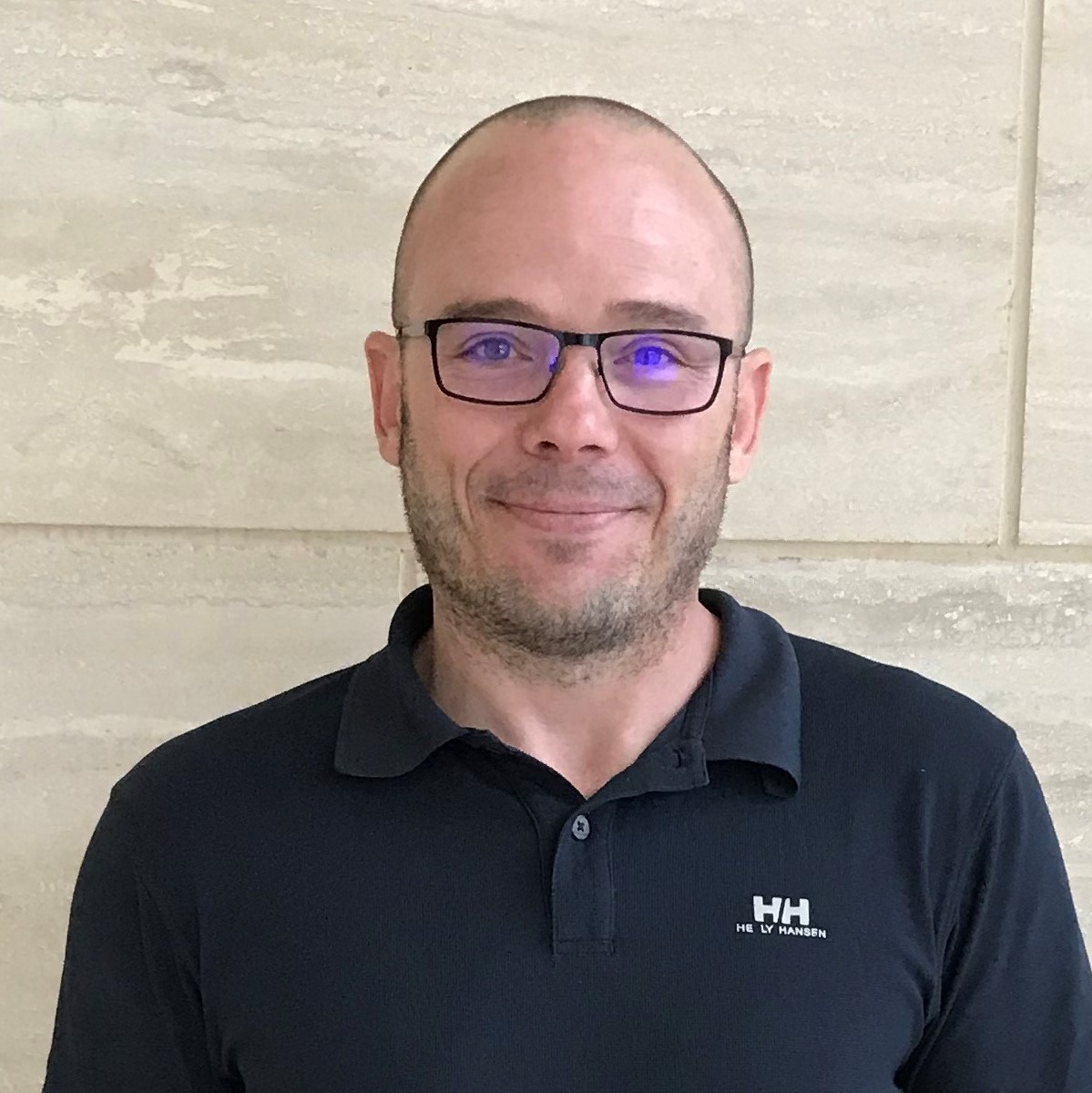
Chaska Walton’s scientific path has taken them from Barcelona to Madrid and now to California, following a curiosity about the brain that has evolved from fundamental neuroscience to engineering living therapies for neurodegenerative disease. After studying psychology and neuroscience at the Autonomous University of Barcelona, Chaska pursued doctoral work at the Cajal Institute in Madrid, where they challenged long-standing dogma by showing mature neurons can re-enter the cell cycle, a discovery inspired, in part, by Ramón y Cajal’s own vision that the “science of the future” might one day overturn even his harshest decrees. They later brought that spirit of reimagining biology to the Buck Institute, where their work has shifted from probing mechanisms of neuronal vulnerability and aging to designing synthetic immune-cell therapies for Alzheimer’s disease, including programmable CAR-Treg and smart cell delivery platforms. Driven by the belief that neurodegeneration is not an inevitable consequence of aging but a biological process we can interrogate, engineer, and ultimately change, Chaska’s research sits at the intersection of neuroscience, synthetic biology, and translational medicine. The only rule is that there are no rules.
PART 1 of 2
“What first drew you to this field of science, and what keeps you motivated today?”
We are, in essence, editable code. Some argue that we cannot edit ourselves, but that misses the point. It is not about whether we can do something today. In the Stone Age, humans could not fly, yet flight was never forbidden by physics. The limitation was technological, not fundamental. Likewise, biology does not forbid rewriting ourselves. We are editable code. It did not have to be that way, but it is. Whether we possess the tools today is irrelevant to what is possible in principle. One day we will have the tools. I can guarantee that. We will design proteins that evolution would never produce and express them in our cells. We will make new cell types with new functions. We will make new organs and duplicate others. Whether we can or cannot do it today is irrelevant. It will happen because we are editable. It is not forbidden by biology. There are no rules. We are just code. THERE. ARE. NO. LIMITS. That is what makes every day exciting.
“What central problem or question is your research currently trying to solve, and why does it matter?”
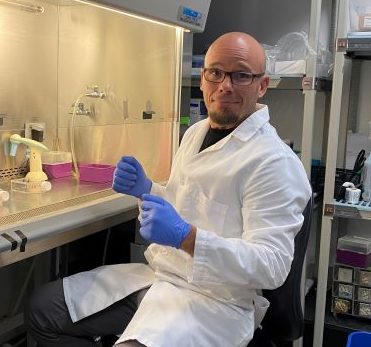 In sci-fi movies there is this concept of nanobots that can travel through the body and fix damaged tissue. They use nanorobots that act as mini physicians patrolling the body. We are working on this concept, but instead of using mechanical nanorobots we are using cells, specifically immune cells. We are engineering these immune cells to give them the ability to detect specific forms of pathology found in Alzheimer’s disease and, in response, synthesize and deliver therapeutic drugs.
It matters because modern medicine may never be able to cure complex diseases like Alzheimer’s. Think of a complex disease like a car. Say the disease starts with a flat tire. We keep driving the car with the flat tire and this affects the wheel itself, which is grinding against the asphalt. Now the wheel is damaged and the shaft holding the wheel is strained. The shaft breaks and the car grinds against the road, leaking oil and ultimately damaging the engine. The approach of modern medicine is to fix one of those things only. We either fix the flat tire, or the wheel, or the shaft, or the engine. We never fix all of them at the same time. The crazy thing is that we expect the car to work by fixing just one thing.
Alzheimer’s presents multiple pathologies including amyloid beta and tau toxic aggregates, inflammation, reactive microglia, and synapse dysfunction. Our research and clinical trials literally assess interventions that tackle only one of those aspects. We have zero clinical trials trying to fix all of these pathological hallmarks of Alzheimer’s at the same time. Still, we expect Alzheimer’s to be cured very much like we expect the broken engine in the car to work by fixing the flat tire. This is not rhetoric. This is a fact. This is how modern medicine thinks.
We are trying to change this by building a system capable of fixing all of the car parts at the same time. That is why we are using engineered cells. We are designing them to act in concert, much like our own immune system, to deliver multiple drugs with micrometer accuracy and to stop when the drugs are no longer needed. We believe this type of approach can cure Alzheimer’s and many other complex diseases. Diseases that we have long considered incurable will become treatable.
Read Part 2 where Walton takes us into his work in the lab, and where he sees the field headed in the next 5-10 years.
SHARE