
by Buck Institute
June 11, 2026 . BLOG
Faces of Discovery:
Parminder Singh, PhD
At the Buck, our breakthroughs are powered by people. Faces of Discovery, a monthly installment to the Buck Blog, introduces the scientists unraveling the mysteries of aging and pioneering ways to help us all live better longer.
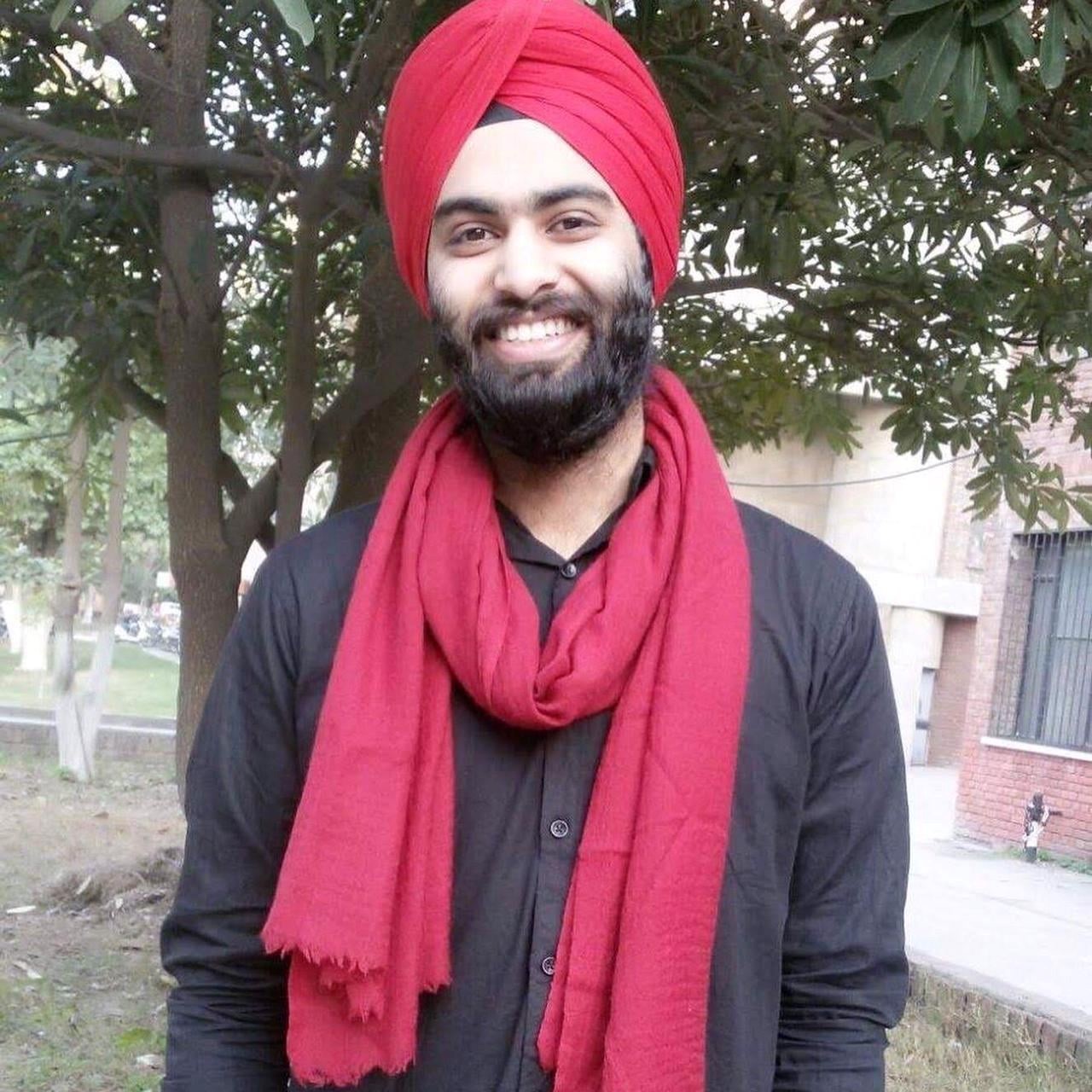 Dr. Parminder Singh received his PhD from the National Institute of Immunology, India, with training in endocrinology and metabolism. He then joined Dr. Pankaj Kapahi’s lab at the Buck Institute for Research on Aging as a Postdoctoral Research Fellow, where his work focuses on understanding how inter organ communication shapes the biology of aging. He was awarded the Larry H. Hillblom Postdoctoral Fellowship to investigate how endogenous metabolites influence cellular senescence and insulin resistance. Outside the lab, Dr. Singh is known for his affable personality and enjoys exploring new recipes, cooking, and writing quotes.
“What first drew you to this field of science, and what keeps you motivated today?”
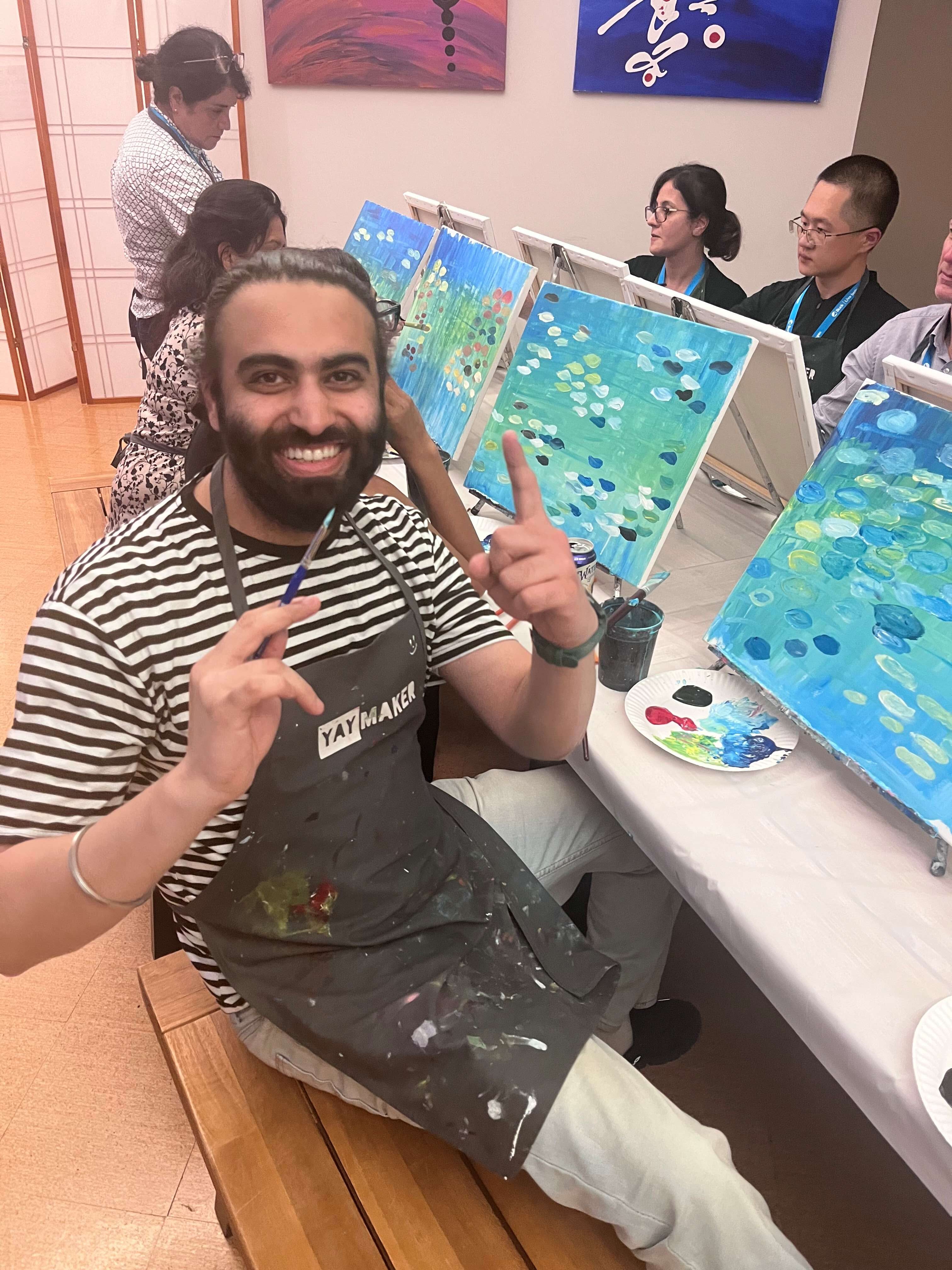
Exploring the artistic side of a not-so-artistic scientist.
It’s a bit ironic that I almost did not study biology in high school. At that time, I was far more drawn to physics and mathematics and had seriously considered skipping biology altogether. What changed that path was my school principal, who persuaded my parents to have me take biology as an additional subject because he believed I had a natural aptitude for it. That decision quietly shaped everything that followed. Once I entered the field, I was pulled in not just by the science itself, but by the stories behind it. Learning about historic biological discoveries, the people behind them, and the persistence and curiosity that drove those breakthroughs fascinated me deeply.
Over time, I realized that understanding core concepts and explaining them to others came naturally to me. Teaching, discussing, and simplifying complex ideas felt less like work and more like storytelling. Today, I see myself less as someone who just runs experiments and more as a storyteller of biology, trying to uncover new narratives about how our bodies age, adapt, and sometimes fail. What keeps me motivated now is the opportunity to make new discoveries, so I can tell more meaningful stories and share them in ways that help people connect to the science shaping their health and everyday lives.
“What central problem or question is your research currently trying to solve, and why does it matter?”
Over the past few decades, science has made enormous progress in understanding what individual organs do and how they function in isolation. We also know that organs constantly communicate with one another through hormones, metabolites, nerves, and immune signals. What remains far less understood is how disruptions in this interorgan communication reshape the aging process itself. In other words, we know the parts, but we still do not fully understand the conversation between them, especially how that conversation changes with age.
A major focus of my work is uncovering what internal and external factors disturb these signals and why those disturbances do not affect everyone the same way. Importantly, inter-organ communication differs between males and females, particularly during major life transitions such as menopause. These sex-specific differences are often overlooked in biomedical research, yet they may explain why diseases emerge differently in men and women. By understanding how and why these communication networks break down, we may be able to design more precise, sex-specific therapies that target aging at its root rather than treating its consequences.
“Can you describe a recent experiment, breakthrough, or surprising finding in your work—and what it could mean for the future?”
Behind the lab doors, my research focuses on two closely connected aspects of aging: the biological effects of menopause and the impact of excess sugar on the body.
The first area of my research examines how the loss of ovarian function affects the brain and the rest of the body. Menopause is a natural life transition that occurs when the ovaries gradually stop releasing eggs and reduce their production of hormones and other signaling molecules. Although menopause is often discussed mainly in relation to reproductive health, its effects extend far beyond fertility. The ovaries communicate with many organs throughout the body, including the brain, and help regulate several aspects of metabolism and overall health.
In addition to natural menopause, some women experience surgical menopause following the removal of both ovaries, a procedure known as bilateral oophorectomy. Historically, approximately 300,000 women worldwide have undergone bilateral oophorectomy each year. Unlike natural menopause, which generally occurs gradually, bilateral oophorectomy can cause an abrupt loss of ovarian signals, particularly when performed before the natural age of menopause.
To better understand the biological consequences of this sudden transition, we use a laboratory model called bilateral ovariectomy, or OVX, in which the ovaries are surgically removed. This model allows us to investigate how the loss of communication between the ovaries and other organs influences aging and health.
Our research suggests that the hypothalamus is particularly sensitive to the loss of ovarian signals. The hypothalamus is a small but essential region of the brain that helps regulate sleep, metabolism, appetite, body temperature, energy balance, and hormonal activity. When communication between the ovaries and the brain is disrupted, certain neurons in the hypothalamus may become less functional, while nearby support cells can become more reactive. These changes may help us understand why symptoms and health risks such as sleep disturbances, metabolic dysfunction, fatigue, and cognitive changes can become more common after menopause or surgical removal of the ovaries.
My second area of research investigates how excess sugar can accelerate aging. Over time, high sugar intake and impaired sugar metabolism can lead to the formation of harmful molecules known as advanced glycation end products, or AGEs. These molecules are formed when sugars react with proteins, fats, or other cellular components. This process can interfere with the normal function of cells and tissues.
Our research suggests that the buildup of these harmful molecules may promote cellular aging and damage in multiple organs, including the brain, blood vessels, and eyes. For example, glycation can make blood vessels stiffer, increase cellular stress, and contribute to inflammation. These changes may raise the risk of age-related conditions such as cardiovascular disease, metabolic disorders, and cognitive decline.
Importantly, these two areas of research may be closely connected. Menopause can alter metabolism and reduce the body’s ability to cope with metabolic stress. As a result, the harmful effects of excess sugar may become more pronounced after menopause, potentially accelerating certain aspects of aging.
By studying how reproductive aging and metabolic health interact, we hope to identify new ways to support healthier aging and reduce the risk of disease later in life.
“If you were explaining your research to a curious grandmother who hasn’t taken biology since high school, how would you describe it?”
I often explain my research like this. The organs in your body are like members of a family that are constantly talking to each other. The brain acts as the head of the family, keeping everyone organized and calm, while the ovaries send important messages that help guide those decisions. During menopause, those ovarian messages naturally fade, and the brain, suddenly has less information to work with. When that happens, the brain can go into a kind of panic mode. Like a family leader under stress, it starts sending confused or rushed signals, and that anxiety spreads to the rest of the family, meaning other organs such as the liver, as well as fat tissues and muscles.
At the same time, our everyday habits, like eating lots of sugary foods, create sticky byproducts in the body that slowly interfere with how cells do their jobs, almost like dust clogging up machinery. When menopause and these metabolic stresses happen together, certain parts of the brain become more sensitive and start aging faster than others. My work is about figuring out why this happens and how we can support the brain so it stays healthier and more resilient as we grow older.
"What difference could this work make?"
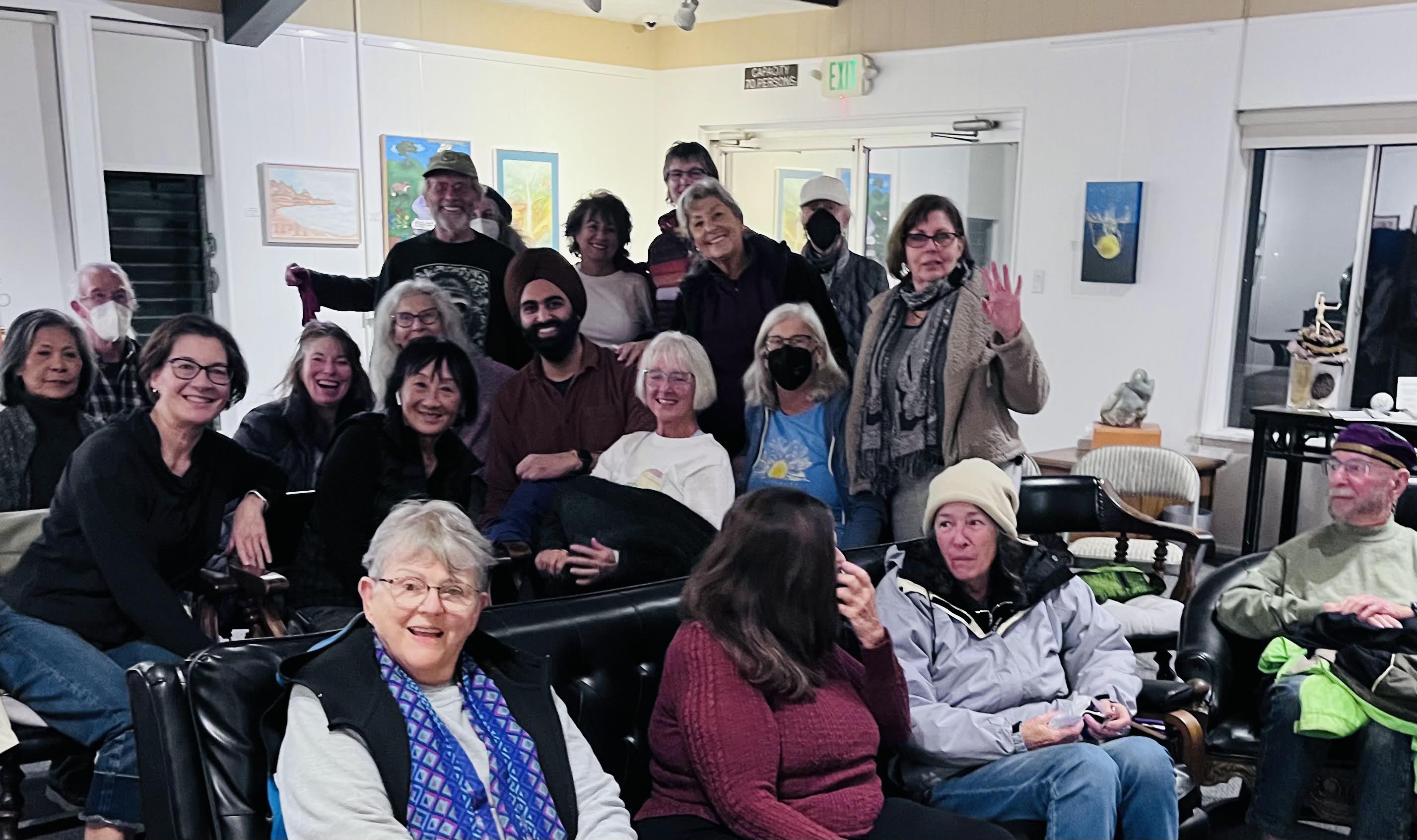
Sharing the science, we love with the people whose lives inspire us to keep asking better questions.
My work aims to improve how we understand aging, particularly in women. Many age -associated diseases develop gradually, shaped by biological changes that begin long before symptoms appear. By identifying how menopause and metabolic stress affect brain function early, this research opens opportunities for prevention rather than late-stage treatment.
It also emphasizes the need for sexs-pecific approaches to health and aging. Understanding these biological differences could lead to more precise strategies to preserve brain and metabolic health, supporting better quality of life as we grow older.
“What excites you most about where your field is heading in the next 5–10 years?”

My favorite secret spot at Lands' End, where the city slows down and the mind finally gets some space to breathe.
The next decade feels destined to be a defining era for research on aging. With advances in artificial intelligence, high throughput screening, and large-scale data, we are no longer limited to finding one insight at a time. We can identify new therapeutic targets and rapidly test thousands of existing drugs against them, turning ideas into action at an unprecedented speed.
What makes this especially exciting for me is the feeling that the field is constantly unfolding in front of us. I am learning every day, watching new patterns emerge, and hoping to uncover my own discoveries along the way. At its heart, this work is still about stories, uncovering how biology works, where it breaks, and how it adapts. I look forward to finding those stories and sharing them with all of you as they continue to unfold.
SHARE