Rejuvenating the Brain
Guest
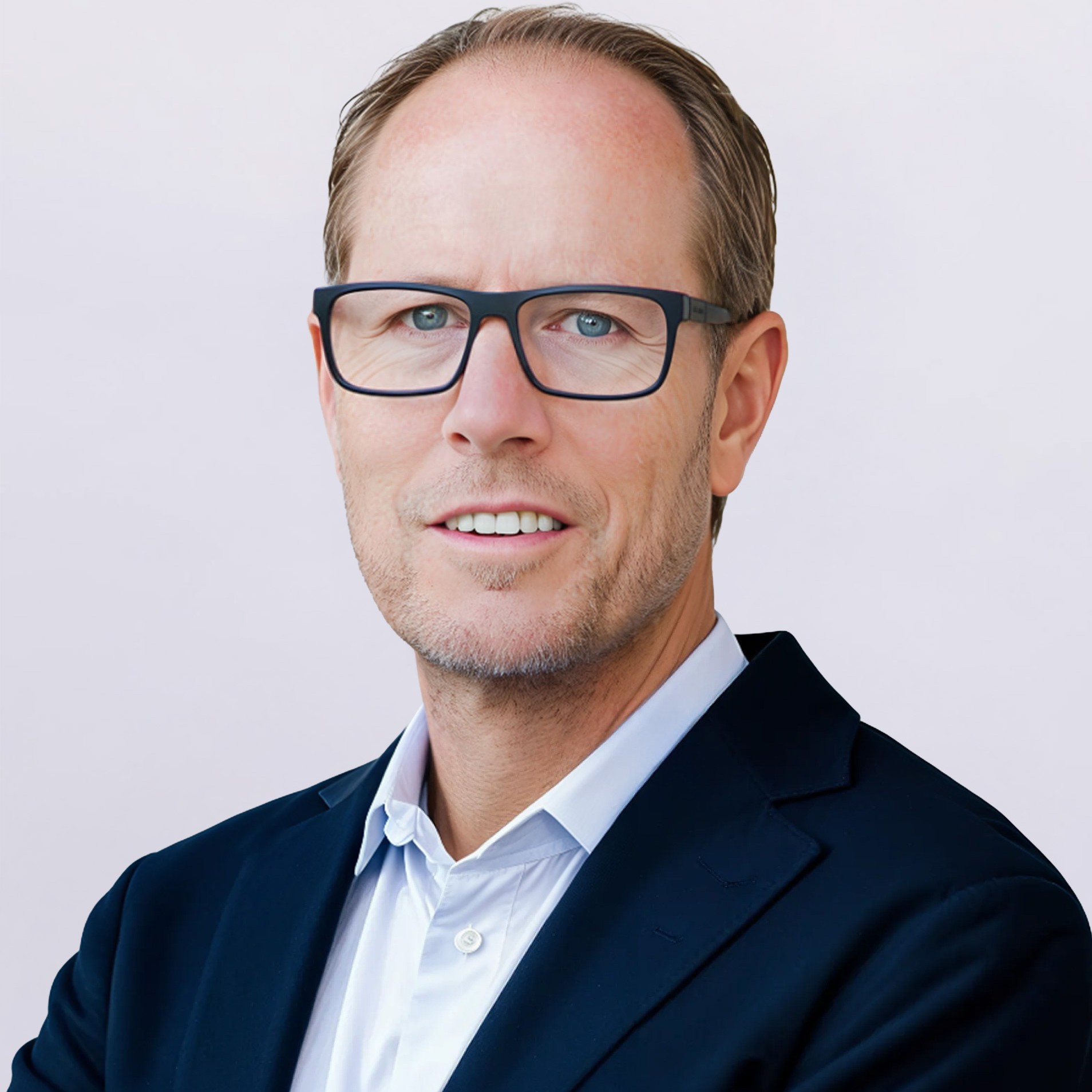
Tony Wyss-Coray, PhD
Professor, Stanford University School of Medicine
Tony Wyss-Coray is a Professor of Neurology and Neurological Sciences and the Director of the Phil and Penny Knight Initiative for Brain Resilience at Stanford University. His lab studies brain aging and neurodegeneration with a focus on age-related cognitive decline and Alzheimer’s disease. The Wyss-Coray research team discovered that circulatory blood factors can modulate brain structure and function and factors from young organisms can rejuvenate old brains. Current studies focus on the molecular basis of the systemic communication with the brain by employing a combination of genetic, cell biology, and –omics approaches in killifish, mice, and humans. Wyss-Coray has presented his ideas at Global TED, the Tencent WE Summit, and the World Economic Forum. He co-founded Alkahest Inc. and several other companies targeting Alzheimer’s and neurodegeneration and has been the recipient of an NIH Director’s Pioneer Award, a Zenith Award from the Alzheimer’s Association, and a NOMIS Foundation Award.
TRANSCRIPT
Brianna Stubbs:
This episode is presented by Ashton Thomas Private Wealth, guiding families and institutions with clarity today and strength that endures for generations.
Tony Wyss-Coray:
If you want to change something, change a disease, you need to be able to measure it. How can we affect aging of an organ, let’s say the brain, if we can’t measure how the brain ages? It doesn’t help you if you know how old the entire person is. You need to measure the brain age. There’s no way around it.
Eric Verdin:
Aging is evolving. No longer are we subject to forces beyond our understanding and control. We have charted the landscape and explored the frontiers of aging.
Brianna Stubbs:
What was science fiction is close to becoming reality, restoring sight, repairing tissues, reviving cells, organs, and maybe even our minds.
Eric Verdin:
I’m Eric Verdin, CEO of the Buck Institute.
Brianna Stubbs:
And I’m Brianna Stubbs, a scientist here at The Buck.
Eric Verdin:
On this podcast, we dive deep into geroscience, studying the intersection of aging and disease with some of the brightest scientific stars on the planet. Join us because we’re not getting any younger yet. Hi Brianna, how are you?
Read more close
Brianna Stubbs:
I’m doing pretty well today. I’m doing well.
Eric Verdin:
I just sat down with uh Tony Wyss-Coray.
Brianna Stubbs:
Another giant in the field. You keep scoring these great conversations.
Eric Verdin:
Yeah, Tony is is an old friend, and it was uh a true joy and pleasure to talk about his work.
Brianna Stubbs:
Yeah, well, I mean, he is another one where um, you know, we’ve all heard of Tony and his early work in parabiosis, the super sci-fi experiments, where you know, two animals you join them together and they share blood, and I feel like that’s been satirized in various like TV shows. It’s super futuristic, super controversial. So I hope you got him to talk a little bit about that work.
Eric Verdin:
We talked a lot about this. We also talked about his new work on uh these proteomics clocks. So he’s you know moving the whole field in terms of biomarkers of aging from the epigenetic clock to proteomics clock, which I think are the next uh frontier. And so he shared all of this and again, new development in terms of uh commercializing this. Tony is also very active in the in the biotech world. So I think it’s gonna be a well-rounded discussion of some new frontiers in aging science.
Brianna Stubbs:
Always good to speak to people who are kind of again taking things from the bench out through into the real world. And I’m really excited to start using some of these organ-specific proteomic clocks and some of the research we do here at the Bucks. So yeah.
Eric Verdin:
Let’s listen together. Good afternoon, Tony. Delighted to have you here. I’m uh really excited to uh learn from you and to to see where the science of aging in the brain is going.
Tony Wyss-Coray:
Yeah, hi Eric. Thanks for having me.
Eric Verdin:
Wonderful. Yeah, you were a postdoc at the Gladstone Institute when I was a junior faculty there. You were working on neurodegeneration at the time already. I knew, you know, from early days that you were going to be a star. And and all of a sudden, you know, you were all over the news, being the first person to show that uh blood from young mice could actually regenerate or rejuvenate the brain of older mice. An experiment that we referred to as heterochronic parabiosis.
Tony Wyss-Coray:
Yeah, I started to uh investigate the immune system in the brain. We manipulated the immune system, and it turned out as soon as you did anything to the immune system, you actually changed the critical pathology in these models that have uh proteins built up we call amyloid. So, in other words, if you activated the immune system in any way, you had either more or less of this amyloid and neurodegeneration in the brain. And I tried to make sense of that and thought that maybe the best thing is to see what happens to the immune system in humans with amyloid in their brain, with Alzheimer’s disease. And so we started to profile, this is now 25 years ago, we started to try to get blood samples from patients with Alzheimer’s disease. At the time, most people thought that didn’t make any sense because it’s a brain disorder. But anyway, we got some samples together and measured immune factors, and we found that some changes occurred that tracked with Alzheimer’s disease, but what was much more prominent were changes just with age. So when we looked in people younger versus older, we saw a lot of these immune proteins change in concentrations in the blood. But we didn’t know was this a cause of Alzheimer’s disease and aging, or was it just actually contributing to aging and potentially Alzheimer’s disease? And that’s when my mentor here at Stanford at the time, Tom Rando, started to work with this model called parabiosis, where he asked, as a stem cell researcher, he asked whether muscle stem cells which start to lose their activity with age and don’t produce muscle cells anymore. Tom asked whether these muscle cells age because something inside the cell is missing or something in the environment, in the circulation is missing. And so he used this model called parabiosis. He asked whether he could change the circulation of an old mouse and give it basically a young supply of blood, whether that would change the stem cells in the muscle. And indeed, what they reported is that the stem cells could be rejuvenated and the muscle regenerated. They had some indication that in the brain there’s also more division of cells. Indeed, young blood would activate what we call neural stem cells to make more neurons, and most importantly, improve cognitive function in these mice.
Eric Verdin:
How long did the benefit last for the for the for the old mouse?
Tony Wyss-Coray:
So they sutured mice together for and left them together for several months and then separated them surgically. And what they found is that old mice who were paired for three months with young mice lived several weeks longer than mice who were old mice paired with old mice. So this would translate to maybe 10 years of human life. Of course, you have to be careful translating mouse and mouse experiments to humans. But uh the short answer is the effects are long-lasting.
Eric Verdin:
They’re persisting, and that that’s really interesting, which would mean that you might not necessarily, you know, to be continuously perfused, but uh episodic administration of fresh plasma products or a therapeutic plasma exchange could actually have benef long-term benefits. And that’s that’s an important uh variable.
Tony Wyss-Coray:
Correct. And this is consistent with um the effects that several groups have described on stem cells. So if stem cells are regenerated or rejuvenated, if you will, and they start making more um progenitor cells and mature cells, they’re not gonna die immediately if you stop giving beneficial factors, but they’re around and they have regenerated the tissue now.
Eric Verdin:
Exactly.
Tony Wyss-Coray:
So you are truly uh having, I think, a rejuvenating effect, what people call it.
Eric Verdin:
That’s amazing. Remarkable uh finding. Now, this um one of the things that uh that excited me is at the time you did not stop there. You know, curing uh dementia in old mice is interesting, but uh many of us are actually worried about you know what’s going to happen as we age. Um you you took this to the next levels.
Tony Wyss-Coray:
Yeah, so because we we have already started working with human and human samples, we were really interested in potentially translating these findings. So again, we found that if you look in patients who are old or patients with Alzheimer’s disease, they have very different composition of the blood than younger people or healthy people. And so the question was again, could you take the blood of a young individual and put it in an old and have a beneficial effect? And the mice showed that this is potentially doable, and in mice we could improve cognitive function. So the obvious next question was, could you do this in humans? And of course, at the beginning this sounded completely crazy. And you know, some people thought this was really scary to even think of something like that. This is, you know, vampirism and and you know, Frankenstein and all kinds of um things, and you know, you would steal young babies’ blood and all the stuff. But if you think about it, um, you know, tens of thousands, hundreds of thousands of people get plasma or blood influence in hospitals all the time for um whether they have um injuries or uh doing surgery, or even for therapeutic purposes, um, clinicians would remove the blood, especially the liquid fraction we call plasma, from individuals and then replenish that with fractions of blood, which typically comes from young donors. And there’s companies who produce these medical products, they collect um donations of blood, or again, mostly the liquid fraction, plasma, from tens of thousands of people every year. They pool this and they make all kinds of clinical products for um sick people, or as again, as I said, for replenishing lost blood. And so we decided to test this idea. Could we work with um people who collect plasma for therapeutic purposes and use this plasma to treat potentially patients with Alzheimer’s disease or Parkinson’s disease?
Eric Verdin:
And what happened?
Tony Wyss-Coray:
So, what we found is um, first of all, we tested these fractions, these clinically approved products in mice. We tested a number of different fractions and found that they are indeed beneficial in the mice. So we could reproduce some of the findings from my lab, but extend them to clinical products and show they can improve cognitive function in old mice. And we then conducted phase uh, phase two trials in patients with Alzheimer’s disease and Parkinson’s disease, and could show that these treatments are safe and they look sort of promising if we look at some of the outcomes in these patients. Anecdotally, people said they felt better, which is also backed up by studies that had been published or had been reported before. And we could also show at the molecular level that there were some benefits. We have not done what the field requires really for clinical approval of a treatment, which is called a phase three trial. And that trial usually involves hundreds or or even thousands of people. So a you know, a big clinical trial in Alzheimer’s disease may have 2,000 people. And we have not gotten there yet. These trials are extremely expensive, they’re difficult to do. But we hope that this can still move forward. But in the meantime, others have shown, and especially the company we worked with called Griffols, they have shown that if you remove plasma from old people and you give them uh plasma from the average donor, which ages about 30 years old, that they have significant benefits, functional benefits. And also, again, molecular uh readouts that are consistent with these benefits. And these studies were actually placebo controlled. So patients didn’t know whether they got plasma or sort of a mock infusion of just uh saline. Again, it was not powered to be a full phase three study, but um looks very promising.
Eric Verdin:
That’s that’s exciting. As you know, we uh we just reported on therapeutic plasma exchange, uh, where we did something similar. We removed the plasma, re-infused the cells, and we’re able to show uh we did not actually look specifically in the brain, but that could be done in the future. Um, we were able to show that uh using a number of clocks, aging clocks, we were able to show some degree of rejuvenation. You know, I hate to use the term reversing of aging, but at least uh some of the clocks were moving in the right direction. So they really seem, which, you know, this addresses um one of the central questions about parabiosis. It’s uh it’s never been really clear whether you are causing the rejuvenation by adding young factors from the old mouse to the old one, or removing negative factors from the old mouse by subtracting them. Where do you land on this? Obviously, you know, the field initially jumped in and was looking for you know rejuvenation factor. Um, but those have been hard to find, correct? And it seems that the field is moving slowly now to removing old plasma. I would love to hear where you where you stand on this this discussion.
Tony Wyss-Coray:
Aaron Powell Yeah, I think, you know, as in biology, most of the time both sides are right. And they’re, you know, co biology is so complicated that um and so sophisticated that usually it uses both approaches. I mean, it wouldn’t make sense that you would have in the blood only beneficial factors and no detrimental factors accumulate. Um, and you know, we showed in our first paper, we actually showed that um when we just compared uh the composition of the blood from uh mice that underwent parabiosis or not, um, we found accumulation of detrimental factors. One in particular we pursued actually in our companies called EOTAxin. And that factor has now come up in multiple studies, you know, most recently in what people call brain fog or chemotherapy-induced cognitive impairment from Michel Mangier. But we have also shown that irradiation leads to an increase in this factor and maybe potentially be tied to cognitive impairment. So this is a factor that seems to accumulate with age and be detrimental for the brain. Another one Saul Vileda also described was beta-2 microglobulin. Um, and I’m I’m sure there’s many, many more. But there’s also clear evidence for beneficial factors, and they may even be more concentrated in the youngest blood you can find. And so I think there’s a there’s a huge opportunity to identify both beneficial and detrimental factors, and I can imagine that the best cocktail, if you will, uh will combine both of these and um and try to target multiple different pathways.
Eric Verdin:
You love this stuff. Um I love the connection also with eotoxin, which is a another immune molecule and and and brain fog as you were describing. What else is exciting in the whole field of brain immunology?
Tony Wyss-Coray:
Yeah, a lot. I mean, this this field is really cooking now. It’s become such a uh you know productive field where people indeed, as you say, show that changes in the circulation or in the rest of the body have an incredibly powerful effect on brain function. And we know this sort of right. We know if we if we have an infection, if we have the flu, we feel miserable. Obviously, you know, these some factors regulate our brain state, our mood. But um equally exciting are these observations that factors from the gut, whether they’re from immune cells, but sometimes from bacteria, can through the blood get into the brain and then regulate activity of brain cells. And so I think there’s tremendous opportunities to try to understand these and regulate them, modulate them to the benefit of people with you know chronic diseases, um, untractable diseases, um, and potentially, you know, age-related cognitive decline and extending sort of cognitive health into old age. Yeah, it’s really exciting.
Eric Verdin:
I could not agree more. And I when people ask me, you know, what are the areas that you would focus on in terms of your health, I always tell them uh the gut barrier permeability is is a is one that’s really critically important and uh and one to focus on with relatively easy, you know, lifestyle changes in terms of diet and so on, fiber and so on. So um it’s really and you know I always remind people that half of the immune system is actually located in your gut. Uh so whatever you put in your gut is going to affect your immune function and thereby your brain. So uh it’s great to see that so much progress is being made in this area. All right, so let’s move on onto something related but still completely different. Biomarkers of aging, which uh is really another area in which you’ve had a major impact in the last few years. Uh why do we need biomarkers in the aging field?
Tony Wyss-Coray:
Yeah, I think the the simplest answer is if you want to change something, uh if you want to change a disease, you need to be able to measure it. And the simplest example is maybe blood pressure. If you couldn’t make measure blood pressure, you could not treat it because you wouldn’t know if a drug or any intervention would actually have an effect on it. So, how can we affect aging of an organ, let’s say the brain, if we can’t measure how the brain ages? Um, and that actually also includes just another very important uh piece of this discussion. You need to be able to measure different organs, even different cells, that you want to treat. It doesn’t help you if you know how old the entire person is, even if they have a biological age that is younger or older, that is not helpful if you want to understand how the brain age is. You need to measure the brain age. If you want to treat the heart, the age of the heart, you need to measure the age of the heart. There’s no way around it. Um, so I think for us, uh it just emerged naturally out of this curiosity whether we can find molecular markers in the blood that track with Alzheimer’s disease. That you know, we started 25 years ago, uh, where we used a very simple platform. We measured 120 cytokines and gross factors and related proteins at the time, with a platform that was not very reproducible. It was actually a filter array for those who know what that is. So we got pretty noisy data, but it was still, it showed us that again, the concentration of proteins changes very significantly with age, and some of the proteins change with disease.
Eric Verdin:
And so, what were these initial observations? You had uh you identified some specific biomarkers that were predictive of Alzheimer’s?
Tony Wyss-Coray:
That’s right. Yeah, at the time, actually, we had a prominent article in the New York Times that said blood test for Alzheimer’s disease. And we tried to translate this to the clinic, but the platform was too noisy, and we couldn’t really get reproducible results. But we used machine learning at the time to show that you can extract signatures that predict whether a person will decline cognitively or will have Alzheimer’s disease or not. It was a small study, and the data were noisy, but it really led us to pursue this and say, okay, we need better platforms, we need more samples, and here we are now. With working with this consortium from Gates Venture, for example, it’s called the Global Neurodegeneration Proteomics Consortium, which assembled 33,000 samples from patients with different neurodegenerative diseases and 7,000 protein measurements in plasma. So now we can work with uh you know really statistical power. And it turns out to be true. You find signatures for all these uh neurodegenerative diseases in the blood.
Eric Verdin:
That is amazing. And so can you tell us uh about Tau P217? Where where does this fit in this whole picture?
Tony Wyss-Coray:
Yeah, that’s a great question. So um if we just say take a step a step back, you know, medicine has, I think, figured out a long time ago that you can measure certain diseases in the blood. You find what we call a biomarker that tells you whether somebody is sick or has a disease, whether it’s a pathogen or whatever. In Alzheimer’s disease, people accumulate two proteins. One is called A beta, that forms these amyloid plaques, and then the other is tau that comes in different flavors. In the past, these proteins could only be detected when a person had died, but the field has really made progress to detect them first in the spinal fluid, in this fluid that bases the brain. So you you make a puncture into the lumbar spinal cord and you extract this fluid and you can measure these A, beta, and Tau. And then with imaging, with uh radioactive imaging tracers, people can measure them now. And most recently, people developed sensitive enough methods to measure them in the blood. So now we can measure the pathological hallmarks of Alzheimer’s disease in the blood. So this is like you measure cholesterol associated with heart disease, or any other indicators of a certain disease, whether your liver doesn’t function, you measure transaminases, or you measure uh proteins from the kidney that gives you indication of kidney disease. Now we can measure these proteins as an indicator of Alzheimer’s disease.
Eric Verdin:
Fascinating. So I want to get into an area that is a little bit controversial. Is there’s been a lot of uh noise in the lay press uh these days talking about the failure of the Alzheimer’s field and and the failure of the amyloid and the you know fibrils hypothesis. And and and the basis for this is the fact that uh most labs have been pursuing A beta as a as a target, and maybe even tau as as a target and as a as a drug target, but also as the primary cause of Alzheimer’s. And the the complaint has been that all of this work and these interventions have not yielded the type of interventions that we were hoping for. Um there’s a whole movement right now in the field discussing, well, maybe the immune system is actually critical in this whole process. Um I’ve always felt that there’s gotta be a reconciliation of both of these hypotheses. Where do you where do you fit in in this whole landscape in terms of uh you know, sort of uh throwing the baby with the bathwater? Because there’s a lot of important work has been done on A beta and tau, and I feel that um there’s gotta be some truth to the role of these proteins and the role of these proteins in Alzheimer’s disease. Um but at the same time, the the immune hypothesis is certainly uh gaining a lot of traction. So I would love to see how you reconcile those two in your own work.
Tony Wyss-Coray:
Yeah, I I think again, biology is complex, and and I I think everybody’s right here. Again, um there is incontrovertible evidence that if you have genetic mutations, if you have a mistake in your DNA, if you will, in either the uh protein that generates this amyloid or the Tau, you get neurodegeneration 100%, almost 100%. Maybe there is one in a million who would escape that fate. Um it’s very clear then that if you want to understand the biology of this disease, and the people who have these mutations, they’re very rare, but the people who get Alzheimer’s disease, their brains look almost the same as the ones from these people with the rare form, the genetic form of disease. So it’s very obvious that if you want to understand this, what we call the sporadic form that affects most people, that you study the mechanisms of how you get this uh these proteins to accumulate. And um, it’s it’s sort of like heart disease that I mentioned earlier. If your arteries are completely full and obliterated with cholesterol-laden macrophages, and you’re sort of at a stage where any physician can see that your coronary arteries are completely obstructed, it’s very difficult to use a cholesterol-lowering uh drug and have any effect, right? You need a stent, or you may even need a transplant for your heart. That’s where we are with the Alzheimer’s disease field today. So the fact that a drug that lowers a beta or tau may not have an effect in a person with advanced disease is very obvious to me. It’s too late. But we also see at the same time, if you start to treat people very early, we start to see more and more positive signs that people actually benefit from these drugs. And I think in the future, we will have hopefully drugs that are very efficient that we can use in lower doses because we can deliver them better to the brain, that lower uh A beta and Tau, which are accumulating in all of us as we get older. I mean, this is sort of how this all ties together with aging. We find that these pathologies that are characteristic of Alzheimer’s disease actually they start very early in almost all of us. So our levels of A beta keep going up as we get older. And it’s almost as if you die of something else, you will not get Alzheimer’s. But if you lived long enough, almost everybody gets it. There are a few people who don’t get it, but it’s such a prevalent disease that, you know, I always say Alzheimer’s is the is probably the prototypical expression of an aging brain. It’s the age-related disease of the brain. Parkinson’s much less so. So if we look at the age of the brain as a predictor of future Alzheimer’s disease, we get very, very strong predictive value. If you have an old brain, you’re much more likely to get Alzheimer’s. But the link to Parkinson is not as clear. There’s probably other aspects there that come in.
Eric Verdin:
Got it. Really exciting thing. So that the answer in your voice is early detection with better biomarkers and early therapies, and uh, which actually is is quite a hopeful message. Let’s turn on to another amazing story that’s coming out of your lab, and I imagine it was a consequence of you looking for uh Alzheimer’s biomarkers, is recent work that you’ve published on proteomics clocks. Um you want to tell us a little bit about I imagine they came out of the work on Alzheimer’s, but they have taken a much broader significance. So, what are the proteomics clocks?
Tony Wyss-Coray:
What we found early on, again, is that protein concentrations change with age. Uh, they change dramatically. And in all of us, from a very early age on, if you look at hundreds of proteins, and now we have platforms that can very reliably measure actually thousands of proteins in the blood. If you look at human lifespan across human lifespan or mouse lifespan, you see that the concentration of these proteins keeps changing. So if something keeps changing with age, you can take an individual sample and you can say how old it is simply by the fact that it will only fit into the age in continuum, if we will, in one place. It’s like you have a piece of a puzzle and you ask, where does it fit in? And these people call these now clocks. Um, it’s not really a clock, it’s actually an estimate of biology that gives you a relationship to age. That’s a bit a complicated description of it. But a clock measures time, and what we want to measure is biological age. We want to estimate how old a tissue is.
Eric Verdin:
I thought that being Swiss, you would actually like the term of using a clock.
Tony Wyss-Coray:
Quite the opposite, because again, uh the Swiss have perfected measuring time uh at highest precision. And if you want to know time, you use a clock. If you want to know biological age, um, you use a machine learning model that estimates the molecular features of a tissue. Um, sort of like any clinical measurement that you use uh in a clinical test or a blood test, right? If you measure something. Um I see it more like that, but I’m not gonna change the term clock because I know it has already taken hold.
Eric Verdin:
It’s too catchy and it you know originated with uh Steve Horvath’s work who was measuring biological age using epigenetics and then and coined this term epigenetic clock. So I think we’re stuck with the term clock. In some way, I I’ve made peace with it in a way it measures biological time, uh, which is another form of time in the way that we age at different rates. Um I think your paper was incredible uh that came out in Nature last um last uh December, I believe, uh, because it not only identified all these signatures of proteins, thousands of proteins changing in the blood during the aging process, but really in its ability to predict the biology and to predict where someone is. So the idea is that we we all have, you know, I know my chronological age, you know yours. What I want to know is with respect to a reference population, am I aging faster or am I aging slower? And what your paper did this remarkably strongly, um, but it also did more, and it was able to identify specific aging in unique organs.
Tony Wyss-Coray:
Yeah, I mean we’re we’re we’re a bit surprised how much attraction it it received. Um because I always, again, I describe it as something that clinical chemistry has done for decades. You go to the doctor, you give a sample of blood, and the doctor measures, you know, 50 to 100 different molecules, and gives you sort of like when you bring your car in the garage, they give you a state, okay, this part is still okay, I would change that part. Um and this is what we’ve been doing in clinical chemistry with lots of different uh functions, but we have not really taken advantage of the tremendous explosion of uh capabilities of measurements we have now. As we discussed earlier, we can now measure thousands of proteins, and uh and with these proteins we can get much more information about different tissues.
Eric Verdin:
So, the the i do I understand correctly? So you’re referring to, for example, your liver enzyme. You know, you in in classical clinical chemistry, when your doctor does your liver enzyme, you can actually detect if someone is drinking too much. Their liver enzymes are leaching out of the liver into the blood, and you measure them. The same thing for tropomyosin. If you have a heart attack, we find a protein from the heart muscle into the blood called tropomyosin, and we know you have some heart suffering. Uh, if you’re doing heavy exercise, you find creatine kinase. But you did this on an organismal level. So describe you know the process through which you you went through to actually generate this new tool.
Tony Wyss-Coray:
That’s exactly right. Like we do in clinical chemistry today, we measure certain proteins. Um, we can now expand that with modern tools to measure thousands of different proteins. One key difference in what we did, I think, sort of looking back, is most of what clinical chemistry does now is measures pathology, stuff that has gone wrong, that is already broken. And uh what we do without being biased, we measure proteins from all kinds of different cells and tissues in your body. And many of these proteins come from all over the place, but some come only from one specific tissue. There’s some proteins that we can detect in the blood that are only produced in the brain. So if they change, we know that there must be something going on in your brain. If there’s a protein that is only produced in the lung and we measure that protein and it changes, we know something is going on in the lung. So what we basically do is we look at proteins that are unique to a specific organ. And then we look, do they change with age? We compare them in the normal population, how do they relate to people at specific ages? And then we ask: are your protein levels similar to your actual age, or are they looking like a person who’s older or younger? And that’s when we really found this amazing relationship between what people call the age gap. So, how much you deviate from your actual age. So, if we tell your brain is older, if let’s say it’s five years older than your actual age, that gap is a very strong prediction of future disease. And for the brain in particular, it’s prediction of Alzheimer’s disease 15 years into the future. And what we found most remarkably, and this is in a cohort called UK Biobank, where we had now access to almost 50,000 individuals with 3,000 protein measurements, we find people with the youngest brain compared to people with the oldest brain have an almost 20-fold difference in the risk to develop Alzheimer’s disease 15 years later. That’s incredible. And if we compare the people with the youngest brains compared to the average population, you have an 80% reduction in mortality in the next 15 years. So if you have a young brain, you’re likely going to live much longer than the average person, and certainly longer than a person who has an older brain. And I think that is part of what we’re excited about, that we start to have readouts. And what’s important to say is the proteins that we use in these predictors are not related to the classical pathological markers. So we’re not measuring a beta and tau. We’re measuring something else. We measure age or aging. And that’s really the exciting part because it offers the possibility to find something that happens much earlier and that you could potentially interfere with before you get the disease. Again, before you have too much amyloid and tau in your brain, and the drugs don’t work. So the drugs that we have now developed to lower A beta levels, maybe we could start trying them in people 10 years before they have the disease, but have very strong risk prediction to get Alzheimer’s disease.
Eric Verdin:
So we’ve come full circle. We intervene too late when a lot of the neurons have died. Now we have these novel markers that are, you know, really very sensitive to early disturbance in brain function that we can measure. So hopefully we can restart clinical trials based on these earliest markers. One other thing that sort of struck me in the paper that is, I believe, coming out soon, describing this new UK Biobank measurement is the fact that there were two organs whose aging seems to be significant for organismal aging. That is, if those organs are aging faster, you’re not likely to do well. And this is the brain, as you just mentioned, but also the immune system. And in some way, what I find fascinating about both organs is that they are the two distributed organs. Your brain, even though it is mostly in your head, is still coordinating all bodily function, and your immune system is essentially distributed everywhere. So the idea that these would be the two organs that you need to focus on on your biology, I think is fascinating. So I’m gonna ask you the last question, it’s gonna be the most difficult, is to ask you to put uh to take your crystal ball and tell me what is going to happen in the next 10 years in this amazing field of longevity and aging.
Tony Wyss-Coray:
That’s right, that’s the hardest question. I do think, with the advances in measurements of these proteins and multiple uh companies producing uh ever more sophisticated and reliable platforms, that these measurements of uh function of different tissues and maybe cell types and uh and other aspects of organismal function will enter the clinic. I think we will start using them to really assess the function of the body at scale and not just um at a time when people are sick and they come to the doctor and the doctor finds out which organ is not working anymore. But um, I think in the next five to ten years we will have standardized tests that can be used by clinicians to help an individual to make decisions, to start using drugs that we already know are working and are beneficial. So you prevent a heart attack rather than having your first heart attack at maybe age 60. We prevent it. Um lifestyle interventions, um, diet, exercise that people can choose and can check how their interventions actually affect the aging of their organs. So they get direct feedback, unlike you get with genetic testing. So I think those we will see. And then out of these observations, I’m sure we will find many new drug targets. Because what we’re measuring is biology, and if we can predict that if your organ is older, um, we know which proteins are telling us that. And so maybe these proteins have something to do with the process of aging and could be therapeutic targets.
Eric Verdin:
Absolutely. So you imagine a world where you will go to see your doctor uh maybe every six months, get a blood test that will assess the suffering or the well-being of every organ in your in your body, and then identify a potential problem and really target it in a much more selective manner and much more early than um than you would uh typically in traditional medicine. And uh, you know, we there we have evidence here at the Bach, and others have evidence that you know disease such as a heart attack or Alzheimer’s start 15 to 20 years earlier. So this is uh finally um these tools are going to be really allowing us to. Practice true preventative medicine.
Tony Wyss-Coray:
I agree. I think that’s where we’re heading, and and it makes complete sense, of course, that you would try to prevent something rather than have it happen and then try to fix it.
Eric Verdin:
Well, I just wanted to uh thank you. I think this was uh truly exciting to hear uh from you, a true visionary in the field, and uh look forward to seeing you soon.
Tony Wyss-Coray:
Thank you so much. It was a pleasure. I really enjoyed it.
Brianna Stubbs:
Thank you so much for listening. Please subscribe, share, and give us a five-star review on Apple, Spotify, or wherever you get your podcasts.
Eric Verdin:
We’re not getting any younger yet. It’s produced by Vital Mind Media. The Buck Institute’s very own Robin Snyder is the executive producer. Wellington Bowler is right next to us here directing the recordings. And the esteemed Sharif Ezzat weaves the show together for you.
Brianna Stubbs:
If you’re listening to this podcast, you know that there has never been a more exciting time in research on aging. Discoveries in the labs are moving into the clinic to help us all live better longer. The Buck Institute depends on the support of people like you to carry on our breakthrough research. Please visit us at BuckInstitute.org to learn more and to donate.com.
Speaker:
Investment advisory services are provided by Ashton Thomas Private Wealth LLC and Ashton Thomas Securities LLC, SEC Registered Investment Advisors. Securities are offered through Ashton Thomas Securities LLC, a registered broker dealer and member of Finro Cipic.