
by Buck Institute
May 11, 2026 . Donor Appreciation
The Buck’s Impact Circle supports a project focused on restoring aged human immune cells
Remember the last time you had a severe flu? Not only were you dealing with acute symptoms, but you were also likely exhausted. That’s because your immune system, the most “expensive” system in the body, was busy redirecting every spare calorie to fighting the infection. This redirection becomes more serious as we age because our mitochondria, organelles that power our immune system (along with every other cell in our body), become less efficient over time. The Buck’s Impact Circle donor group hopes to change that by supporting a project aimed at activating a molecular “switch” that could restore mitochondria, and hence our immune system, to a more youthful state.
 The $135,000 2026 Impact Circle award goes to Olga Bielska PhD, a postdoctoral fellow in the Verdin lab where researchers focus, in large part, on how aging impacts immunity. “I am so grateful to the Impact Circle for their support of a project that tackles one of the biggest challenges in research in aging,” says Bielska. “It is becoming apparent that impaired immune response drives the aging process and ultimately contributes to increased mortality in older adults who cannot mount an effective response to infection. This support provides a critical bridge between discoveries we’ve made in mice to human applications.”
Bielska and her team have identified a proprietary “master switch” protein that is essential for both building new mitochondria and recycling damaged ones. The protein, dubbed EV001, virtually disappears in aging organs. After gathering extensive data in mice (normally aged and young wild type and those deficient in EV001), the team is ready to move into human cells, thanks to the Impact Circle award. Using the same mRNA technology used to create COVID-19 vaccines the team will test the ability of EV001 to deliver a “recharge” instruction to cells drawn from the Verdin lab’s extensive human biobank of immune cells from older donors.
Bielska described the work as a pilot proof of concept study, with the hope that EV001 stops the “energy leak” in mitochondria as well as silencing the false alarms of inflammation which are another hallmark of the aging process.
The team will monitor cellular vitality and the ability of the treated immune cells to respond to challenges and will also determine whether the response to EV001 falls within a safe, physiological range. These experiments will provide the essential data needed to move the therapies toward the clinic.
“I am so thrilled to be able to take this research into human cells,” says Bielska, who is a native of Ukraine. “The question of immune system decline is not ‘if, but when.’ It is something that impacts every human who lives long enough to age. I look forward to updating the Impact Circle as the project moves forward.”
An exciting side note: A member of the Impact Circle asked Bielska a follow up question after she made her pitch for funding. “If you're able to crack this nut with immune cell mitochondria, can that be generalized to other mitochondria and other cells in the body? “Her answer: “Yes, it's actually our big goal. We want to use this funding to create the preliminary data that we would use to apply for a larger grant.”
The Impact Circle
Established in 2014, the Impact Circle is a peer group of like-minded philanthropists who advance scientific discovery at the Buck by pooling their resources to provide seed money for early-stage projects. Members vote on which projects to support.
In addition to the satisfaction of supporting ground-breaking research (and tracking its success), Impact Circle members also get a front row seat to learn about the scientific process. Previous awards have focused on efforts to support brain resilience, to tame age-related muscle loss via the gut, and to run a first-ever pilot study to look at the effects of a ketogenic supplement in older adults.
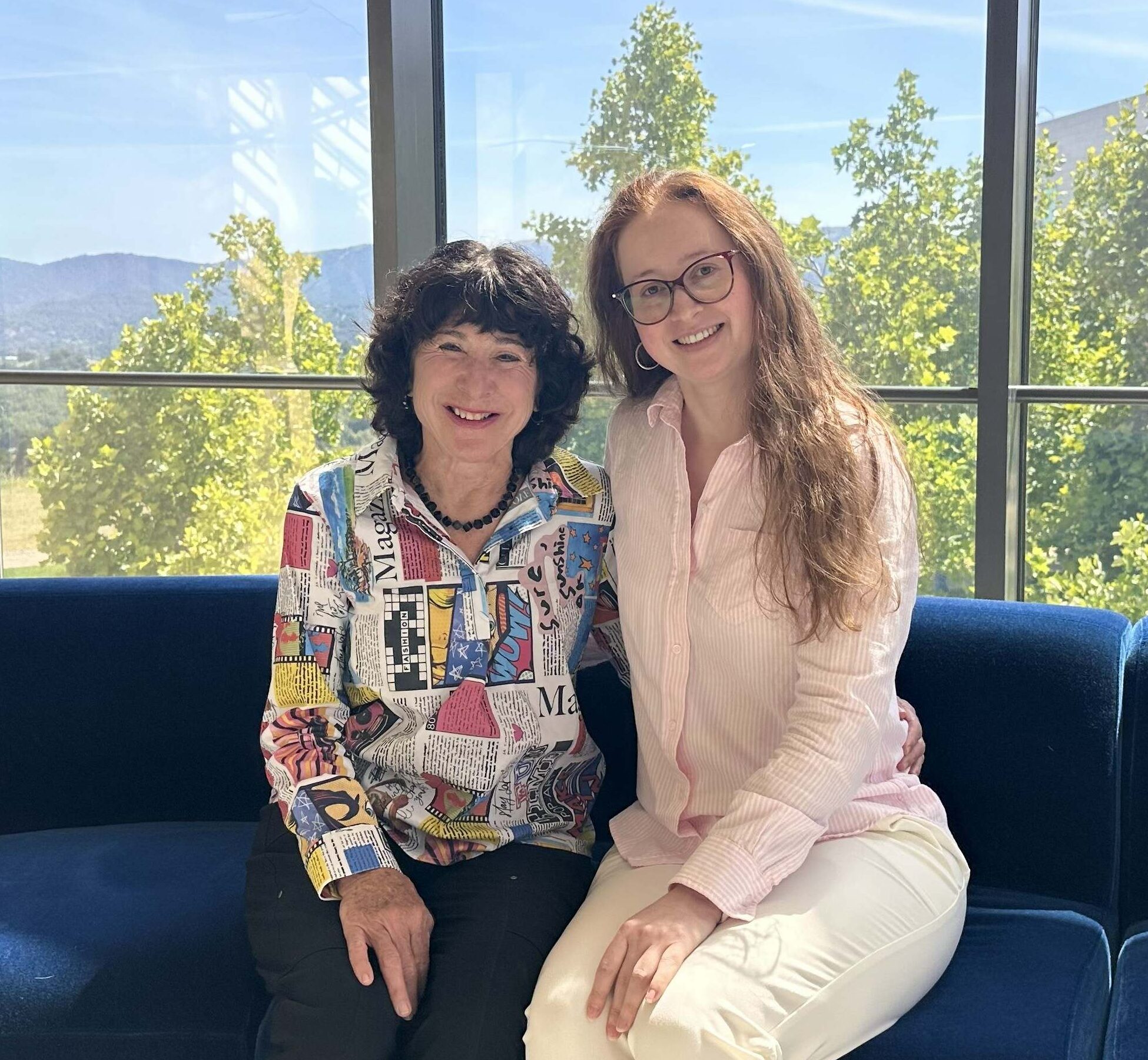 Sandy Sverdloff is a new addition to the Impact Circle, following a long history of supporting the Buck. The San Rafael resident and her late husband became donors shortly after the Institute opened in 1991 when they attended some public events. She and Director of Philanthropy Lisa Palma became hiking buddies during the pandemic. Sandy’s enthusiasm for the Buck soared after she attended the 2025 Levy Family Seminar and heard a talk on “Scientific Wellness” by Chief Innovation Officer, Lee Hood, MD, PhD. “I loved how the Buck was broadening its vision to include direct applications for human health and I got excited by the clinical trials that were being developed and made available to local residents. I knew it was time to up my commitment.”
Sandy, who is retired after long careers in IT/banking and real estate, enjoyed her first Impact Circle meeting where she got to consider funding four potential projects. “It was the most exciting, intellectually stimulating gathering I’ve attended since college! I am more aware and appreciative of the possibilities of the science. I am honored to be involved with the Buck.”
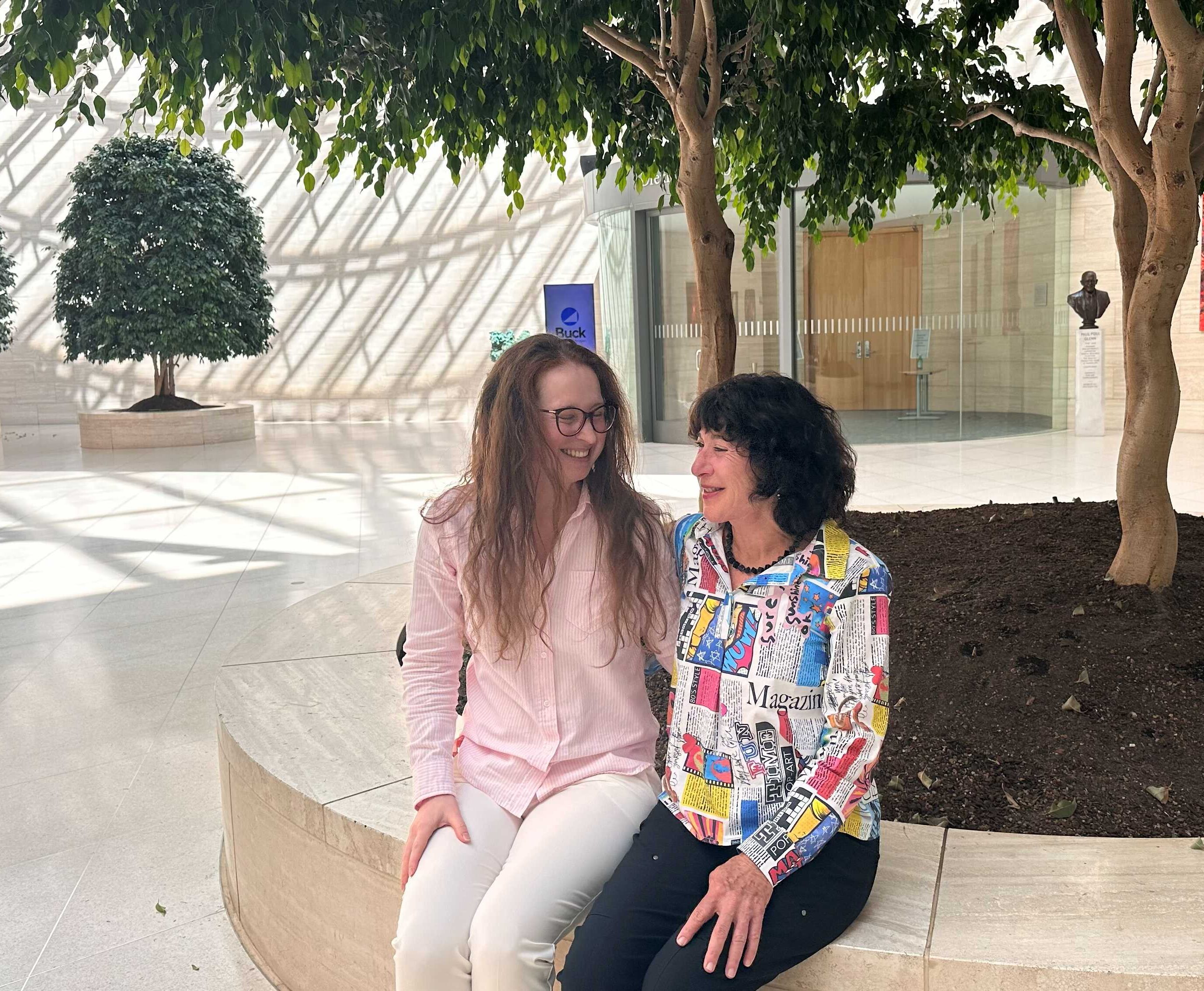
A personal aside: Sandy and Olga took the same elevator to attend the Impact Circle meeting. It turns out that Sandy has some family roots in the Ukraine. The two were able to connect over shared geography and a love for that culture.
Membership in the Impact Circle remains open. Those interested should contact Lisa Palma, Director of Philanthropy, at lpalma@buckinstitute.org.
Science is showing that while chronological aging is inevitable, biological aging is malleable. There's a part of it that you can fight, and we are getting closer and closer to winning that fight.
Eric Verdin, MD, Buck Institute President and CEO