
by Buck Institute
March 30, 2026 . BLOG
Want to Boost Longevity and Lower the Risk of Heart Disease? Eat Nuts
By Eric Verdin, MD, President & CEO, Buck Institute
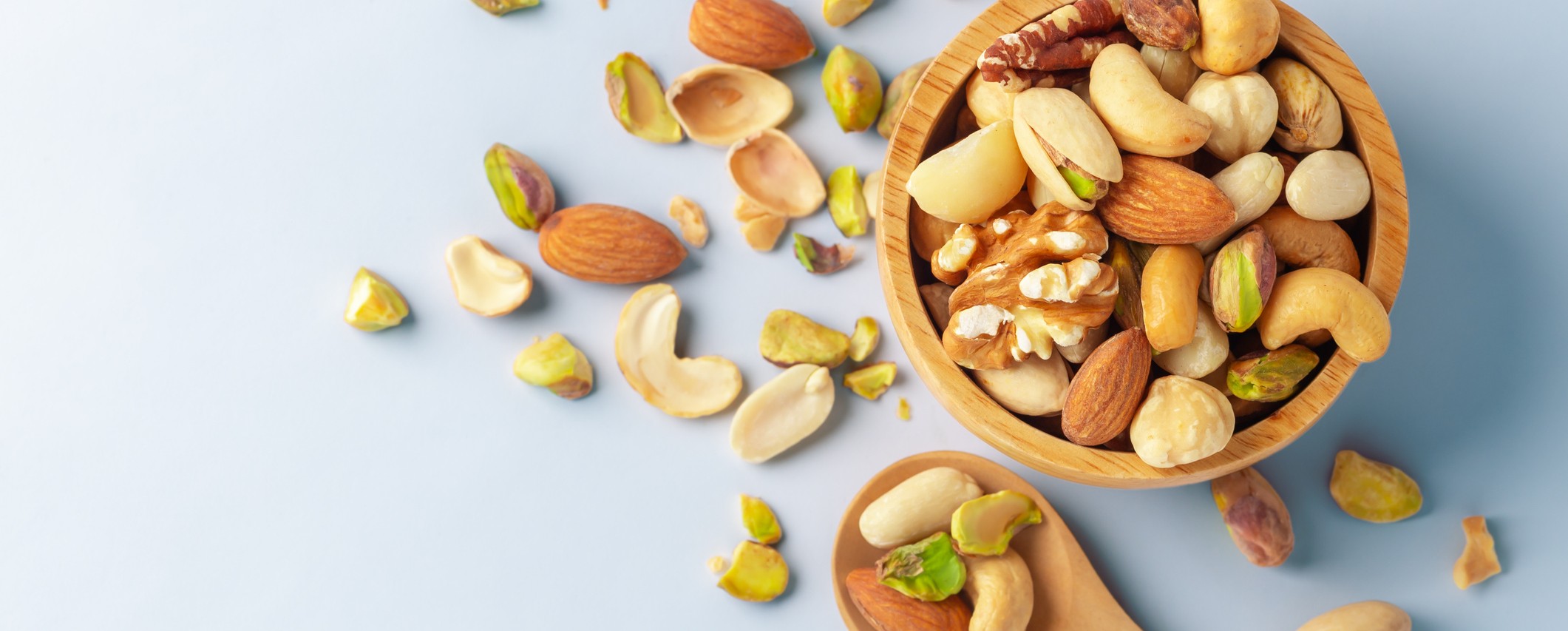
 People are always asking me what they can do to change their health trajectory. They typically do this with some trepidation, holding their breath as they await a list of the arduous do’s and don’ts they expect to hear. The good news? Not all potentially life-altering changes need to be massive. In fact, it can be as simple as turning to something that’s probably already in your pantry: nuts! It turns out that eating a small handful of nuts each day has a profound impact on your health and longevity. This is not a fad or a wellness trend with shaky evidence, but rather one of the most consistently supported dietary habits in modern nutrition science.
A major scientific review published in BMC Medicine analyzed data from multiple long-term prospective studies that followed hundreds of thousands of people over many years. The researchers found that people who ate about one ounce of nuts per day — think about the size of a golf ball — had a 22% lower risk of dying from any cause compared to those who rarely ate nuts. In other words, nut eaters lived longer. And what makes this particularly compelling is that the benefit appeared consistently across different populations, age ranges and dietary backgrounds.
Part of the reason nuts deliver such broad benefits is because of their unique nutritional composition. Although they are calorie-dense, those calories come packaged with healthy unsaturated fats that support heart and brain function, along with plant-based protein, gut-friendly fiber and a wide range of vitamins and minerals such as magnesium, potassium and selenium. Nuts are also rich in polyphenols and other antioxidants, which help protect cells from inflammation and oxidative stress — two processes that accelerate aging and drive the development of chronic disease over time.
Nowhere is the impact of nut consumption more impressive than in heart health. That same BMC Medicine meta-anaysis found that people who ate nuts daily had a 21% lower risk of cardiovascular disease overall and a 25–29% lower risk of coronary heart disease, the form of heart disease most likely to cause heart attacks. (Remember that these findings come not from a single study, but from an aggregation of many, strengthening their reliability).
Photo by Maddi Bazzoco courtesy of Unsplash
Even more striking evidence comes from a major randomized clinical trial known as PREDIMED, which tested the Mediterranean diet in people at high risk of cardiovascular disease. Participants who followed the Mediterranean diet supplemented with a daily serving of mixed nuts saw about a 30% reduction in major cardiovascular events, and one arm of the study showed nearly a 50% reduction in stroke risk. Unlike observational research, randomized trials are better positioned to demonstrate cause and effect, which makes these outcomes particularly impactful.
The benefits extend beyond the heart. The BMC Medicine review also found that people who consumed nuts regularly had an 11% lower risk of dying from cancer. Certain cancers showed even stronger associations, such as colon cancer, which appeared significantly less common among frequent nut eaters. Scientists believe that this protection arises from the combined effects of antioxidants, fiber and anti-inflammatory compounds, which support healthy cell function and help the body manage oxidative stress.
While people are sometimes wary of the high calorie content of nuts, study after study has shown that adding them to your diet does not lead to weight gain and, in fact, may cause you to eat less! That’s because nuts promote satiety, slow digestion and not all of their fat is absorbed — meaning they help people naturally eat more mindfully without feeling deprived.
This is one of the rare health habits that is supported by rigorous science, easy to adopt and genuinely enjoyable. Bon appétit!
SHARE