
by Buck Institute
October 23, 2025 . BLOG
Faces of Discovery – Kenny Wilson, PhD
At the Buck, our breakthroughs are powered by people. Faces of Discovery, a new monthly installment to the Buck Blog, introduces the scientists unraveling the mysteries of aging and pioneering ways to help us all live better longer.
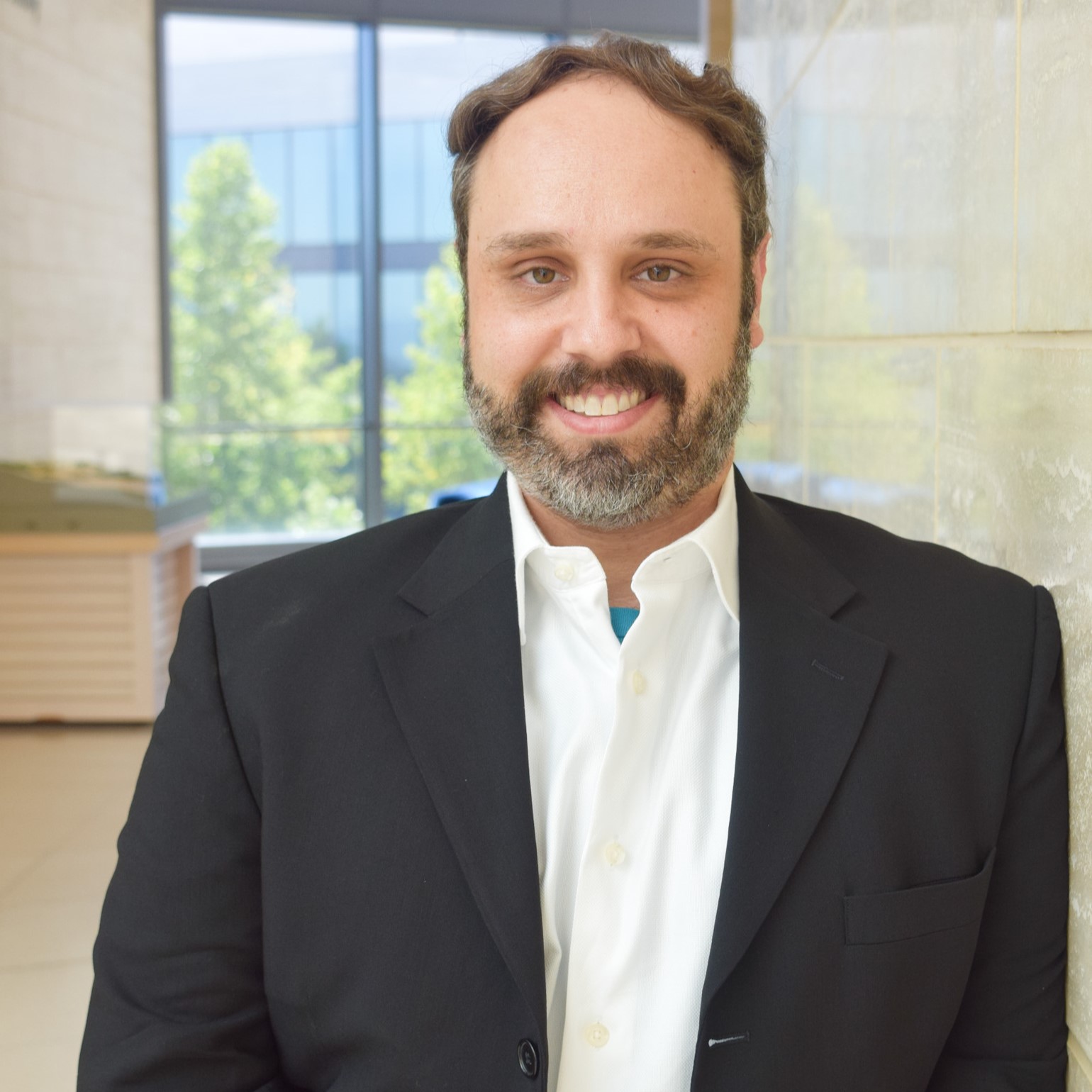 Kenny Wilson, a native of Novato, has been at the Buck for 13 years. He received his Masters through Dominican University in 2014 and his PhD in the Biology of Aging from the Buck Institute - University of Southern California joint program in 2019, during which he worked in the lab of Dr. Pankaj Kapahi. He recently completed a postdoctoral fellowship in the lab of Dr. Lisa Ellerby and has now accepted a faculty position in the Department of Neurology at the Ohio State University Wexner Medical Center.
What first drew you to research on aging, and what keeps you excited about it?
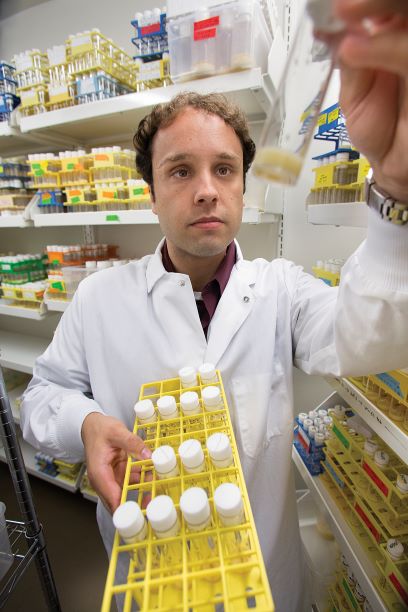 I first became interested in science when I was in middle school. As a young kid at Our Lady of Loretto School in Novato, I got mostly A's and B's in every subject but I struggled with science. What helped me change that was seeing the fun side of it. Most subjects in school teach you facts and expect you to memorize them. Science is only partially about learning facts, because a huge part of it is finding things out for yourself! My middle school science teacher used to have us do fun experiments in class and encouraged us to come up with our own experiments at home. By the time I was in high school, learning about genetics and the Human Genome Project, I was hooked. After graduating with a degree in molecular and cell biology from University of California, Berkeley, I knew I wanted to pursue my PhD at the Buck because it’s in my hometown. What motivates me is still that aspect of finding things out for myself. The difference is that now I know how to ask the right questions about what causes human aging and have the resources to answer those questions. It feels like I solve complex puzzles for a career, which is an incredible feeling.
Can you give us an overview of your work?
There are a ton of problems that pop up with aging, but why we lose our ability to remember things is one of the most complicated aspects of the aging process. In my opinion, one of the saddest parts of aging is when a person cannot remember their favorite past experiences or their loved one, and I want to understand why that happens. Since Alzheimer's is among the most common diseases of brain aging, it's unfortunately very emotionally painful for a lot of people. The biggest problem is that while we know what happens in Alzheimer's, we don't necessarily know how it happens or what we can do about it. My research tries to answer those questions
Can you describe a recent experiment, breakthrough, or surprising finding in your work—and what it could mean for the future?
My research focuses on is how proteins move around in neurons, the key brain cells involved in memory. When this process breaks down, like it does with aging, you lose the ability to remember things. My work found a gene that can help this process work better with age. And interestingly, when we make this process more efficient, it actually protects lots of different parts of the neurons, including your DNA. Some researchers have seen that DNA damage often happens in Alzheimer's disease, so I am hoping my work might provide cellular targets for preventing or treating this.
If you were explaining your research to someone who hasn’t taken biology since high school, how would you describe it?
Some of the cells in your brain are very unique, since they need to perform the specialized function of regularly and rapidly communicating to form memories and thoughts. These cells do this by sending "cargo" to each other through electrical impulses. The problem is that as you get older, this function breaks down, in part because the cell's ability to traffic cargo falls apart. My research is looking at how to prevent this loss of trafficking function in order to keep your brain cells working, thus allowing memories to be formed and retained.
How might your work eventually impact how people can live better longer?
The goal of my work is to preserve everyone's brain function with age. We think we have found a cellular mechanism that we can use as a target for this. The next steps are to figure out how we can best use this target to develop therapies for people who are suffering from age-related decline in function. This will ensure that everyone could maintain their thoughts and memories for their entire life.
What excites you most about where your field is heading in the next 5–10 years?
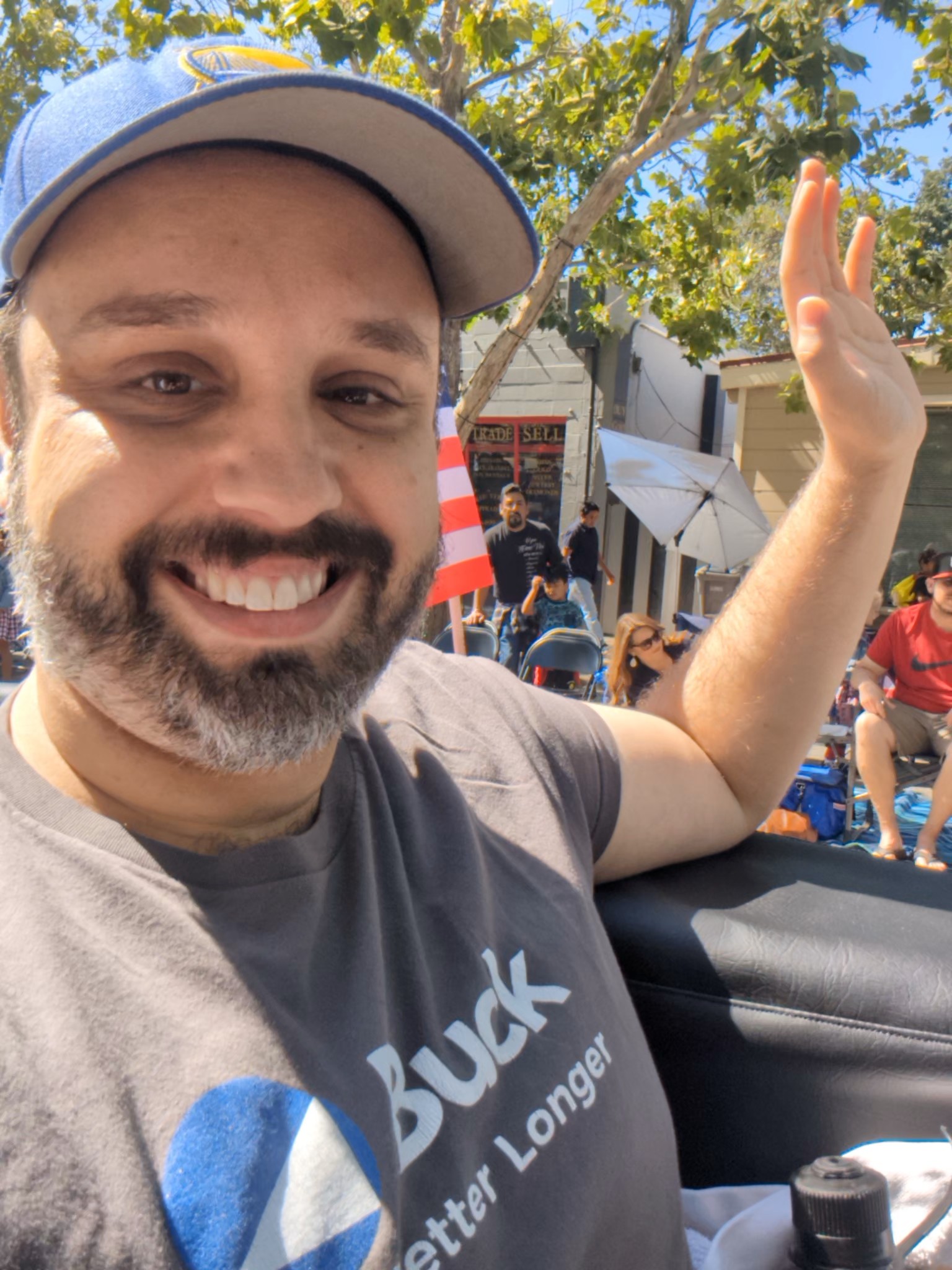 One exciting thing about the current state of science is that there are constantly new technologies that make research faster and easier. For example, we can now use artificial intelligence so that computers recognize patterns in healthy cells versus those with age-related diseases. Some of these patterns are so subtle that a human might never detect them, but computers can find them quickly and accurately. And once we have found these differences, it could take days or weeks for scientists to look by hand at how a drug or compound can affect a cellular function. But with the use of automation technology, we are starting to use robotics to test thousands of drugs at the same time. This will allow us to find new valuable medicines much faster than ever before.
SHARE