Cellular Recycling
Guest
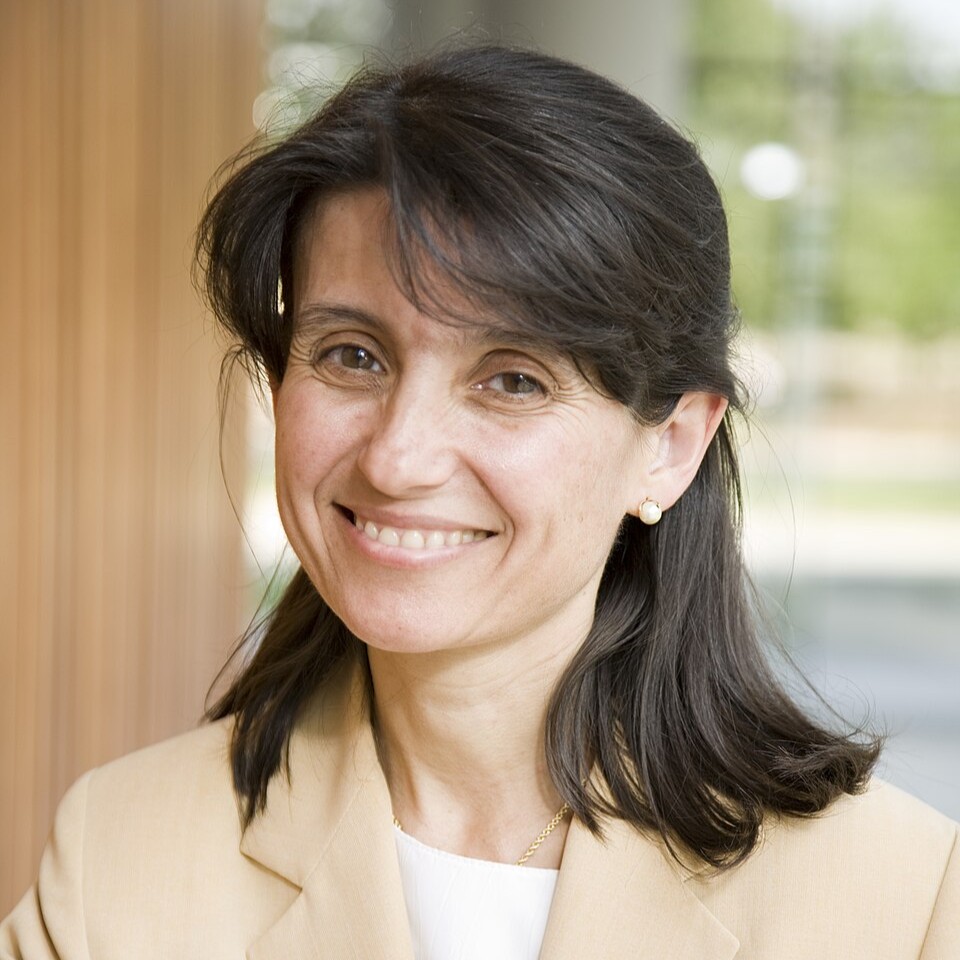
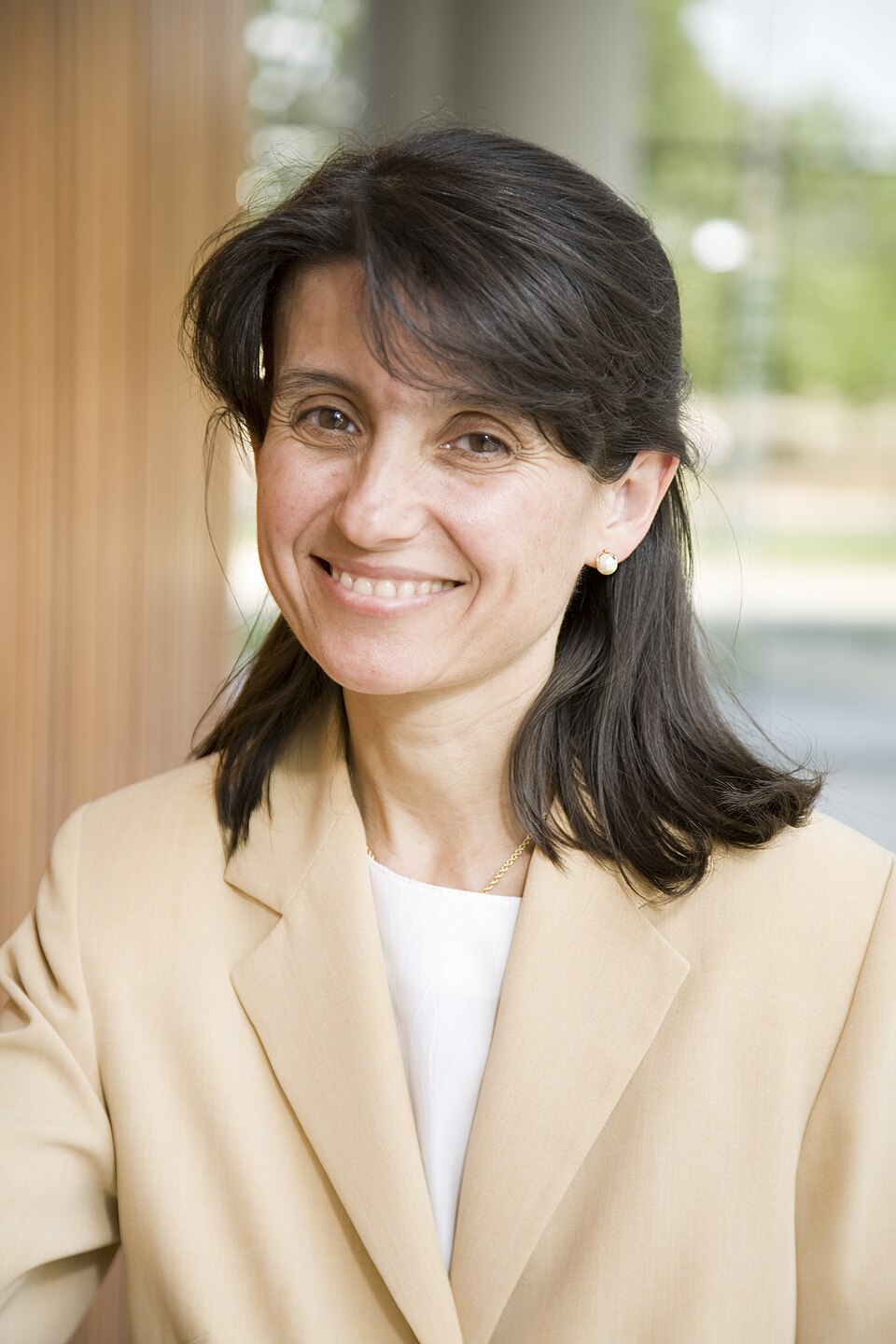
Ana Maria Cuervo, MD, PhD
Distinguished Professor at The Albert Einstein College of Medicine; Robert and Rene Belfer Chair for the Study of Neurodegenerative Diseases; Board Member, American Federation for Aging Research (AFAR)
Ana Maria Cuervo is a Spanish-American physician, researcher, and cell biologist. She is a professor in developmental and molecular biology, anatomy and structural biology, and medicine and co-director of the Institute for Aging Studies at the Albert Einstein College of Medicine. She is best known for her research work on autophagy, the process by which cells recycle waste products, and its changes in aging and age-related diseases.
TRANSCRIPT
Brianna Stubbs:
Before we get going today, Eric and I would like to invite you all to take part in our very first question and answer session. We are going to sit down to answer your questions about aging, biology, research, translational medicine, whatever you can think of. Visit buckinstitute.org/podcast and send us in your most difficult questions. Then tune in for the answers on an upcoming episode. Now, let’s get on with the show. This episode is presented by Ashton Thomas Private Wealth, guiding families and institutions with clarity today and strength that endures for generations.
Ana Maria Cuervo:
If you want to fix something, you have to know what is wrong. And to know what is wrong, you have to know how it works. So that’s why basic research was so important. So it took us 20 years to figure out who are the players in this process and then see which of those ones was not working as you get old. So we seem to be at the systemic level of affecting in a very positive way the health span.
Eric Verdin:
Aging is evolving. No longer are we subject to forces beyond our understanding and control. We have charted the landscape and explored the frontiers of aging.
Read more close
Brianna Stubbs:
What was science fiction is close to becoming reality, restoring sight, repairing tissues, reviving cells, organs, and maybe even our minds.
Eric Verdin:
I’m Eric Verdin, CEO of the Buck Institute.
Brianna Stubbs:
And I’m Brianna Stubbs, the scientist here at The Buck.
Eric Verdin:
On this podcast, we dive deep into geroscience, studying the intersection of aging and disease with some of the brightest scientific stars on the planet. Join us because We’re not getting any younger yet.
Brianna Stubbs:
Hey Eric!
Eric Verdin:
Hey, how are you, Brianna?
Brianna Stubbs:
Doing well. I hear you just had a great podcast interview. Tell me about it.
Eric Verdin:
Uh I did. I interviewed Anna Maria Cuervo.
Brianna Stubbs:
Ah, so she’s that Einstein professor whose work focuses on these big uh words, proteostasis and autophagy. I’m sure we’ll get into this on the episode, but give us the you know two-second summary of proteostasis and autophagy for our listeners.
Eric Verdin:
She is great. She’s got amazing energy, and you know, her work focuses on two topics that are very dear to many of us here at the Buck Institute, um, which is autophagy and proteostasis. So just in a in a nutshell, proteostasis is a mechanism by which these uh misfolded proteins that don’t have the proper shape or form to actually exert their activity, we get rid of them or by which we can actually refold them. And one of the mechanisms is actually uh autophagy, which means self-eating, and something that our cells use to get rid of all of those bad proteins, so self-cleaning mechanisms.
Brianna Stubbs:
So kind of like the cell doing uh its housework at the weekend, getting itself ready for the week, like I did all weekend this weekend.
Eric Verdin:
Absolutely. And it’s interestingly, it actually starts by cleaning up the attic, which is really a unique mechanism that she’s gonna go and talk about.
Brianna Stubbs:
Okay, well, I haven’t been in the attic uh at my house for a while, so let’s hope we don’t need to go clean that out. So these are a couple other key hallmarks of aging, uh key focuses of all of our work here at the Buck, and so I’m really interested to hear what she has to say and how it relates to what we do every day here.
Eric Verdin:
And Joey. Today I have the true pleasure of speaking with a pioneer in the biology of aging, Dr. Anna Maria Cuervo. If you’ve ever heard the word autophagy and wondered why scientists are so excited about it, this conversation will tell you everything you need to know. Dr. Cuervo is a physician scientist at the Albert Einstein College of Medicine, where she holds a Robert and Renee Belfur chair for the study of neurodegenerative disease. Most importantly, for today, she discovered and defined a vital cellular process called chaperone-mediated autophagy, or CMA, a kind of intelligent, selective recycling system that has become central to how we think about healthy aging. Today we’ll be talking about autophagy, proteostasis, lifestyle, longevity, and the future of personalized aging medicine. Anna Maria, welcome. It’s always good to see you.
Ana Maria Cuervo:
Thank you for having me.
Eric Verdin:
What drew you to the field of aging?
Ana Maria Cuervo:
Yeah, actually, we didn’t have combined programs as you guys have here that you can do medicine and your thesis at the same time. So I studied medicine first. And when I was doing through my different rotations in the clinical rotations, during the rotation in geriatrics, I become very demoralized. And of course, I’m talking about Spain in the late 80s. So there was not really much that could be done. So the motto was, you know, try to keep senior people as comfortable as possible. But, you know, they are gonna age and they are gonna go. And you know, that was okay. That that was the philosophy in the hospital, but I became very curious about aging. It’s like, how can we cannot do something? And I’m doing, I like to do things. I the idea of giving up was not with me. So then I decided that I wanted to do research, and I wanted to do research in aging. But of course, I was in Valencia, that is um the city in Spain where I went to medical school, and there were not many full-time research institutes. And when I talked with each of the investigators, the only one that mentions the word aging happened to be working on autophagy, and he convinced me that problems with autophagy was the cause of aging. And of course, I was an MV, I didn’t know better, and I was like, that sounds good. This is what I want to do. I want to do something on aging, and that’s how I started, not only working on aging, but specifically on autophagy.
Eric Verdin:
One of the best aspects of uh a life in academia or in life in general, I always tell people, is is the things that you cannot plan, the people that you meet who shift you in one direction or the other, and I think you’re a great example of this. So let’s um step back for our listeners and and discuss proteostasis and and why why it matters. Uh, can you can you give give us some uh foundation understanding of what is proteostasis? Why is it why is it so crucial to aging well?
Ana Maria Cuervo:
Yeah, so so proteostasis refer to the state that all the proteins that you have in your cells are. So just think about your cells. You have in every cell you might have hundreds of thousands of proteins, and imagine the cell as a factory. So the the cell produce these proteins because are important to build things inside the cell, uh, for um regulating uh processes inside the cell. But because it’s a factory, things can go wrong. So you always have to have a very, very strict quality control like you have in a factory, right? When you produce um, you know, any kind of product, you have somebody checking, oh, this is perfectly fine. But not only how is the product itself, how is the protein, but also you have to ship it to the right part of the cell, and it has to arrive at the right time. So you kind of have to have the delivery done in a proper time because if it arrives later, it’s not of use. So that requires, imagine this happening for hundreds of thousands of proteins every single day in every single one of your millions of cells. So that requires a very, very control, uh, I mean, of quality. So basically, you have a designated mechanism, and we can talk about those mechanisms later, that are there to make sure that every protein behaves, is in the right shape, in the right place, at the right time. And this whole global taking care of the quality of your proteins is what is known as proteostasis. And to have an idea how important it is, think for example, if all the sudden a factory will be producing pieces of a car that are defective. I mean, the consequences for all the cars that are being built based on those pieces can be detrimental. But also if they are shipping them to the wrong country, you cannot finish the car because your parts are in the other country instead of where you need it. So that’s why if things don’t happen when they should and the proteins don’t arrive in the right shape and the place that they should be, the cell cannot properly function. And there are many diseases. I know I’m talking about protein factories, uh, but there are many diseases that actually part of the basis is that you have a protein that misbehave because it has a mutation or something that makes it not be in proper function. So then the systems when you are young, your quality control system says, oh, this protein is not how it should, let’s take it out before it makes um a mess in whatever is coming after this protein. But then if you cannot do that because this um quality control or this proteostasis does not work, these abnormal proteins start building up and they contribute to loss of function and disease.
Eric Verdin:
I love the analogy to the factory and uh shipping the right products at the right time and in the right package as well. Uh so when we think about uh failure of proteostasis, can can you give us some ideas uh or some disease associated with aging in which it has really been well documented that that when proteostasis fails, you actually get into some kind of troubles, or practically.
Ana Maria Cuervo:
Yeah, there is actually an always growing list of diseases that has been now found to be related to alterations in proteostasis, because before we didn’t know much about proteostasis, now that we know a little more isisia. But I think the poster child diseases are probably neurodegenerative conditions like Alzheimer’s, Parkinson, Huntington. So these are diseases that we all know because they result in problems in memory or problems in movement, so it’s all related to your neurons, your cells in the brain. And those are the most evident because, contrary to other cells in the body, that when they start accumulating these damaged proteins, they find some other ways, you know, if it’s a cell that divides, at least the cell divides in two, so each of them gets half of the garbage, so it’s not so bad. Neurons, the cells in your brain, they don’t divide. So the garbage or the abnormal protein that you accumulate today is gonna be with you for the rest of your life if you don’t do something about that, because you cannot just dilute it by dividing. So that’s why the accumulation of these proteins inside these cells in the brain ends killing those cells eventually when they start accumulating. And even we all know that we have many cells in the brain, many neurons that we don’t utilize. The problem is that you know you start losing more than you really uh can afford, and then it’s when you start having the symptoms. So the symptoms are different depending on what is the mutant protein and which type of neurons, which part of the brain is primarily affected. But the basis of it is always the same. It’s a protein that is not in the right um shape, or is not in uh it has a mutation or it has some uh anomaly that makes it not function well, and that if you cannot remove or handle it properly timely, it ends accumulating and cause the disease. So even you know, diseases of the brain are the ones that we always think, because those are the best study, and this is not limited to the brain. So, for example, you are very familiar with diabetes. So there are some types of diabetes. Diabetes, as you know, your pancreas cannot produce the insulin that you need to handle glucose. So there are many ways in which unfortunately you can reach diabetes, but there are some forms of diabetes that the problem is that your pancreas cannot handle, like cannot produce insulin in the right shape. So that starts accumulating and start killing the cells of your pancreas, so you end with diabetes. The same is true for diseases of the muscle or diseases of the A. So as I say, the the list keeps growing because now we realize many diseases that before we didn’t know their cause, we now know that there is a primary defect on proteostasis, on how they handle the proteins inside the cells.
Eric Verdin:
So let’s let’s turn to autophagy, which means self-eating. How does that fit? What what does it mean and how does that fit in the whole picture of proteostasis?
Ana Maria Cuervo:
Yeah, so so so going back to the example of the factory, so you have somebody checking the quality of your products. If you are producing something and it’s just a little off, it’s like, okay, you have something that is called a chaperone inside your cell that is gonna trade to repair. It’s like, oh, you know, it was a little misaligned, we just make it better so we have the right product, we have the right protein. Or it was just the tour to a different place, but we can still reroute to the right place. So that’s what chaperones do. But sometimes what happens is that what you are producing is so altered, or it has been damaged later on, and it does it’s not even worth it to repair because it’s like having an old car, right? You repair today something, and two days later something else goes wrong. So so sometimes it’s much more efficient to just recycle your car, gave it for pieces, and just get a new car. So the cells do the same. It’s like they they kind of value the the chaperones that are kind of the police inside your protein police. They check, it’s like, okay, is this protein right? Is it worth it to invest the effort and the time in repair? Or if we cannot do that, let’s eliminate them. But of course, the cells are very conservative. If you will be just destroying whatever is not right, there are many things that are produced in a wrong manner every day. So that will be a waste, right? Because all of a sudden you are spending all this energy in producing something and now you just destroy it. So what they do is they send it to these recycling compartments. I know that we all studied when we were studying in the school that the cells have garbage containers and very into gave them a little of glamour. I I think they are more than garbage containers. They are really the most perfect recycling system in the world. So they are gonna get your damaged proteins, chop, chop, chop. They will break it in pieces. So whatever is not functional anymore, that’s fine, you can eliminate. But whatever still can be used for pieces is like when you have the old car. When you sh send it to these shops, they will take whatever is still useful to repair another car or to do a new car. And that’s what the cell does. So this recycling is very important. And it’s done in this process that is called autophagy. And it’s called autophagy because auto means yourself, phagyi means eating, but it’s not cannibalism. It’s just the cell is eating whatever is not good, whatever is wrong-produced or whatever is damaged, and then recycling the parts that are still good so the cell can utilize them to do new things. So, you know, there are many different ways to do autophagy, but the principle itself is just this breakdown of everything that is abnormal and recycling of the pieces either to produce new proteins or for energy. Because something, and we can talk a little about that later, this process of autophagy is tightly, tightly linked to energetics. When you break down these products, you can use those little pieces to generate energy that, of course, there are sometimes that your cell needs when you are not eating or when you don’t provide the nutrients that the cell needs. So there is this idea of cleaning inside the cell that autophagy does, very coordinated with your um needs for energy to keep functioning.
Eric Verdin:
The first time I read about autophagy, I I was actually amazed because you think about it, it is activated is during fasting when no food is coming in. The body still needs energy to think, to walk, to to do all to have your heartbeat, and it’s starting to self-eat. It’s eating itself, but it eats specially the garbage to generate energy, which is an amazingly efficient process. So now in um 2016, Yoshinori Osumi received the Nobel Prize for discovering the genetic machinery of autophagy in the yeast, in brewer’s yeast, which is an amazing experimental model. And his work uh at the time helped prove that cells can self-digest and recycle their parts. So, how did how did his work influence uh your own research?
Ana Maria Cuervo:
Yeah, so so I know I’ve been in the autophagy field since I was a graduate student. So I I knew uh Oshumi personally. Um, since then, I was a graduate student, he was a starting assistant professor, and this was the time that autophagy was not cool. Nobody cared about autophagy because it was something of the 60s. I mean, these lysosomes, these recycling machineries that I mentioned before, they were first identified in the early 60s by a Belgian. Exactly, by a Belgian, so you should be very proud of that.
Eric Verdin:
Christian de Dueve, yeah.
Ana Maria Cuervo:
And he got a Nobel Prize for the identification of these lysosomes because everybody realized how important they were. But of course, everything, even in science, goes through fashions. And there was a point that is like, you know, these lysosomes, we here have been done, that, we hear about that, let’s move to the new thing. So I think the revitalization, and that’s why uh Dr. Oshumi got the Nobel Prize, and I have to say, I was there during the ceremony, best night of my life. I never clapped so much in my life. This this was a culmination time for the moment for the feel of autophagy. So it was really very, very emotional. But he got it not because of the discovery of autophagy. Autophagy was discovered in the 60s. But from the 60s till the, I will say, mid-90s, the only thing that we could do about autophagy, including my own thesis, that it was also an autophagy, we can we could describe it. We can see by electromicroscopy, we can see these recycling compartments, we can see if there are more or there are less. But we couldn’t manipulate it. And the way that we go in science, as you know very well, if we want to know what something does, we either block it or we even enhance it, and then we see what happened and if this can have some in relation to disease. But we couldn’t do that with autophagy because we didn’t have the precise machinery. We didn’t know who are the genes that participate. So the major contribution of Dr. Oshumi was to do uh, I mean, he realized that yeast, like you know, these very single unicellular organisms also do autophagy. And they need it when, as you mentioned before, if they don’t have food, they have to activate autophagy. So if you somehow alter autophagy and you remove the food, these yeast die. So he used that as a way to screen for genes. He did this random mutagenesis, you know, you mutate every gene in the genome of these yeasts, and then see which ones, when you take out food, they cannot live. And then, of course, through other methods, he identified, oh, this they cannot live because they don’t have autophagy. So he has hit a gene that was essential for autophagy. So that kind of started a big race. So there were like three labs discovering new genes, and the rest of us mesmerized by all these new discoveries. And basically that gave the possibility first to discover that those genes in yeast were also conserved in humans. So the first gene for autophagy discovered in humans was linked to cancer. That was the first disease that was connected to autophagy. And then it was just a matter of time, right? Like every single gene mutations were described in other diseases. Now, because you can block autophagy because you can manipulate these genes, you can see, oh, when you I block it in neurons, this really resembles Alzheimer’s, or this really resembles Parkinson. So you realize that there is a connection there, or then you start measuring is oh, your insulin is altered. So you know, you you start seeing what are the consequences of not having this autophagy functioning, and then you can do the opposite. You can manipulate and say, okay, now let’s enhance autophagy. And that is very elegant word, including uh your own Malene Hansen at the back, that one of her major contributions was to show that if you manipulate and enhance autophagy, sea elegans, the worms that she worked with, live longer. So that kind of shows that if you are able to enhance autophagy, you increase lifespan in sea elegans, and now we have shown in animals, so in mammalian systems. So that was the beauty that, and that’s why he got the Nobel Prize. He didn’t got the Nobel Prize on biology, he got the Nobel Prize in medicine because by discovering these genes related to autophagy, he was able to link he or the community using that information, link autophagy to human diseases and biomedicine.
Eric Verdin:
Very cool. And how is the so you you you your own lab discovered a new form of autophagy called, as I mentioned at the beginning, chaperone-mediated autophagy. How is that different from the general form of autophagy that he studied?
Ana Maria Cuervo:
When you think about how you clean at home, it’s a bit how cells clean, right? So at home you have the vacuum, you have the this uh, I don’t know, the mop, you you have different tools. So there are different ways in which the cells can eliminate and recycle those proteins. So the mechanism that um Dr. Um Oshumi identified um it’s kind of um quantitatively probably. Is the most efficient because it’s imagine that you have like these um kind of tracks that go there and load tons of uh garbage or tons of things that are in the cytosol. But they do it by kind of um opening like the mouth of the track, so whatever is at that moment, uh imagine a Pac-Man. So whatever is at that moment in the cell, you will get the good and the bad, but you know, the advantage is at least you get the bad. So it’s not strictly selective, it can be a little selective, but in general it’s less. Um and then but you can really cover a lot of ground. You can eliminate big things like organelles, you can eliminate many things. There are other ways that are a bit more exquisite. Sometimes you cannot afford to sacrifice the good for the bad. I, you know, if you have to eliminate 20 bad proteins, but that means that you have to sacrifice 10 good ones, sometimes the cell is like, you know, it’s okay, it’s a good trade. But sometimes it’s not. Let’s go for the bad proteins only because we cannot afford resign, like uh recreate again these good ones. So that’s what this process does, this chaperone-mediated autophagy is more imagine that you have a garbage bag and then you have a hook that is bringing only specific things that fish because they are bad. So this kind of hook brings it inside, but it doesn’t touch any other proteins that are still fine around. And that’s kind of like this was the very, very first type of autophagy that was described to be able to identify or discriminate good from bad with the help of a chaperone, and that’s the name. So the chaperons, if you remember, were the police that are looking for what is wrong with proteins, with proteins are not good. So when they identify a protein that is not right and they cannot repair, they bring it to this recycling center. So that will be like the autophagy part. So it’s called chaperon-mediated autophagy because of that.
Eric Verdin:
The discovery of chaperone-mediated autophagy led to the discovery of specific proteins that actually can really help in the system. So um your lab work and the mice is actually pretty striking because you showed that just boosting just one protein, and I’ll I’ll give its name, it’s called LAMP, like a lamp, 2A, just by boosting this one protein, you could improve liver health, cognition, and resilience to aging. So, do you think we could see similar uh restoration of chaperone mediated autophagy applied to humans? Uh is that gonna happen soon?
Ana Maria Cuervo:
Well, soon is always a relative term, right? But um so we think, I mean, I I’m very optimistic about what can be done because the experimental models that we are using are are providing a very good proof of concept. We haven’t cured any human yet. I mean, that will not be part of what I will be doing. Hopefully, smarter people than me will do that. But at least every attempt that we have done to enhance this chaperon-mediated autophagy, it seems to go in the right direction. So you mentioned we have this protein that just by modifying one protein, this pathway works better. That that protein happens to be that hook that I mentioned is the one bringing things inside the garbage, the recycling bag. So that’s why it’s so essential. Just by having so we identify it’s like everything, if you want to fix something, you have to know what is wrong. And to know what is wrong, you have to know how it works. So that’s why basic research was so important. So it took us 20 years to figure out who are the proteins or the players in this or the genes that participate in this process, and then see which of those ones was not working as you get old. So there are probably different ways that this pathway can go down with aging, but kind of almost universally, this lamb to protein, this hook, was the one that was always showing up. It’s like every time that we look in aging, this seems to be, you know, going down. We have less. So as a proof of concept, we thought is that, well, if normally you have less as you age, what about if we now just put it back genetically and then see what happened? And as you mentioned, we did that in mice, and we are about to publish now. So these animals, I mean, we published originally targeting only one organ that was the liver. Now we have targeted the whole organism in mice, and the mice live longer, and it’s not that they live longer and they are agonizing for more time. They are also healthier, they are more resistant to disease, they are more active, better memory. So we seem to be at the systemic level affecting in a very positive way um health span. The only thing is that realistically, I I mean we did this genetically because it was the cleanest way to convince ourselves that by modifying this pathway, this is what we get. Because if we would have done it with drugs or small molecules, there is always the possibilities that, oh, maybe this is not only acting on CMA, right? Maybe it’s acting in many more things. So as scientists, we always go for the cleanest, simple way. So in this case was genetic, and you know, great proof of concept. Now we are convinced ourselves and hopefully a couple more of people, uh, and hopefully industry will start looking into this. So I really don’t think we are gonna start doing gene therapy, at least not in the next 10 years, in people who reach 50 just to prevent that they age and to enhance their CMA. I mean, I think realistically, I don’t think our society is ready to do gene therapy as a prophylac, as a preventive treatment. You use it when you have disease in particular conditions. I I don’t think we are yet there. Um but because we need to make sure we we can, you know, now that we know that this works, it will be very selfish to not do something about that. So I team up with an amazing medicinal chemist, um, Dr. Ebris Gabatiotis, and basically we design small molecules, so like kind of small drugs, that are able to increase the levels of this LAM2. So you have now your recycling compartments now have more hooks, so at a given time they can get more proteins inside for recycling. And we have used that again, we do preclinical and a very basic research lab. We have used it in mouse models for Alzheimer’s, and it works very nice. The animals maintain preserved memory and they have less neuronal damage, they have less anxiety and depression, so it goes in the right direction. We have done it in models of Parkinson’s disease, and we can prevent the motor, like this shaking that is characteristic of Parkinson patients. We have used it in models of um eye degenerative disorders. I mean, we always talk about the big guns like neurodegeneration, like Alzheimer. But one of the major problems with our elders is macular degeneration. It’s not gonna kill you, but not having sight and not having, you know, the capacity to really have good sight is really very limiting for many old people. And it’s something that if we could do something and there is not a good treatment for macular degeneration. So we have a study coming now that we have just used these compounds. And by enhancing CMA, we seem to slow down the loss of sight. So that’s positive too. We have also used it for some muscle disorders. So because this pathway, this process is so universal, right? All your cells have it, and we think that the deterioration of this process with age happens in many, many cells, in many organs. Um, when you gave these compounds, we just gave them orally, you improve many other aspects related to aging. So I think these compounds will have the potential to be applied to clinic. And actually, they they you know, they have been licensed, and hopefully, somebody will do something for some of those diseases at the level of biopharma. That’s that’s beyond my my understanding. But but that’s kind of the idea. And now, you know, as a basic lab, our nice thing is like, okay, let’s find another way to do this because that’s a great way. And I’m convinced this is a very great way, and hopefully those drugs will do something. But it’s always to have a backup plan because if anything, at least can be additive, right? Like you can find two ways to enhance CMA instead of one, will be better. So that’s what we are right now. We are trying to find, and we have another couple of ways that we can increase uh this chaperone mediated autophagy, and we’re just testing in the same models of disease to see if they uh work similarly.
Eric Verdin:
This is uh very important, and it hits actually very close to home. My my mom, who’s 91 years old and who is actually in amazing shape in all respects, mentally, physically, and so on, has macular degeneration and can no longer read, can no longer drive, and it has you might think at 91 she would have been ready, but I see the enormous impact it has on on her last years of life, which is to degrade, you know, the ability to be autonomous and so on. So this it’s great to know that uh you’re working on on uh issues like this. Let’s talk also about some other drugs that might exist today that uh that might actually also targeting uh the um the autophagy process. I’m thinking about, you know, one example that many people have heard about is uh rapamycin. So can you tell us in a few words what what is rapamycin do to autophagy?
Ana Maria Cuervo:
There are actually many of what these are called these jetoprotectant drugs that kind of add on aging. They add on aging because they are able, as you say, aging is not a single cause. You have multiples, and these drugs are good because they add in very different axis of very different of these hallmarks or drivers of aging. So rapamycin originally was introduced in the clinic, and that’s why it was easier to test and you know implement if we need, and was used to suppress the immune system. And basically what it does is inhibits a major kinase. So it’s a protein, it’s kind of a sensor that you have in all your cells that sends what is the amount of energy and nutrients that you have. So if you are eating, this sensor is up and it says, okay, we have food, don’t worry, we don’t have to go into stress, we don’t need to activate autophagy. This person is eating every five minutes, so we’re fine. We don’t need to do anything else. So what happened is that because you are eating, this sensor is telling autophagy, you don’t need to go into the search for bad things because we don’t need your recycling abilities. So then intuitively, you know, through many studies, people are still thinking, is like, well, what about if we shut down that sensor? If we tell that sensor is like, no, no, there is not food. Even if there is food around, let’s it pretend that it’s not food, so then it will let autophagy to be activated. And that’s actually what rapamycin does. Rapamycin is a natural product, but the the main role or the main function that it does is that it inhibits uh it blocks this sensor. So it doesn’t let the sensor tell autophagy we are fine. It just basically tells us, oh, there is no food around, even there is plenty of food. So then autophagy engaged. So that’s why rapamycin, I mean, it does many other things. This energetic sensor has many functions in the cell that you can modulate through rapamycin, but the connection with autophagy is that. And this goes into what we say is like autophagy was connected to food. Uh, and because, you know, when you don’t have things coming, you don’t have nutrients coming, you have to utilize whatever you have around to produce energy. So if you can kind of trick the cell to think that there is not food using this rapamycin, autophagy will get activated.
Eric Verdin:
The same with metformin, I suspect. Another protein that blocks another sensor and so those of you who are on glucophage or metformin listening to us, I think you probably getting some degree of autophagy activation. Definitely. So can you bring this down to what actually people can do today? Are there unique lifestyle factors that can influence autophagy or activate it? What what what what can people do?
Ana Maria Cuervo:
Yeah, I always say that it’s impossible to sound smart with this because it’s basically what my grandma always told me to do, right? So whatever our grandparents told us to do when we were kids, that’s basically what activates autophagy. So so I always say so one of the things I I don’t know you, but growing up in Spain, my my grandma was obsessed about not eating in between meals because then I will have my appetite spoiled and I will not want to have dinner. So that was like a major obsession in most of the grandmas of my time. So I think there is something into that because unfortunately the society that we are right now, many of us, you know, that there is this snacking culture, right? Like it’s like, oh no, I don’t have time to eat, but I can snack. And then you you you you are not very formal in your times of snacking. You are continuously eating something because it’s just a little. So I think that’s kind of killing autophagy because autophagy, as I say, to clean inside, you need the motivation. So the motivation is you don’t have food. So if you don’t have food, then autophagy will activate. And I always say it’s like if you go, for example, to your winter house and all the sudden your heat is not working, but you have this beautiful fireplace, and you say, okay, I can use my fireplace, but I cannot go outside for good. So I have to use what I have in the house. You don’t go for your most beautiful chair and throw it into the fireplace. You go for, okay, this chair is not so good, so maybe I can spare that one and I can get energy and heat the house. So that’s what autophagy does. It goes for all these things that are not so good, and then kind of that’s you know how you get energy. But it needs some motivation. It’s like all of us. You don’t clean your house if there are not motivation to do it, right? So so that’s the motivation. Food, not having food, or and and I I always say, I mean, we don’t have to starve. I I I hate the way fasting and starving. It sounds so dramatic. You just have to do, you know, reasonable separation. And I’m not even gonna say hours, because, you know, as you know very well, Eric, that there are some beautiful studies showing that the time that you separate your uh meals uh is very personalized and it’s also depends on the sex and uh your genders. You know, there are many factors, but it’s very clear that because we talk about these two types of autophagy, right? The one that Oshumi was looking in more detail, the one that we describe. So the first one, when you stop eating or you don’t have food for, I’m not talking crazy time, like you know, if you don’t eat for two hours, that is not a big deal, your liver already activates macroautophagy, this um more conventional type of autophagy. So, you know, if you separate some of your two like major meals by two to six hours, that’s enough for macroautophagy to do something. And then you need a little longer, you need almost eight hours to really get this more cleaning selectivity that we have with chaperone mediated autophagy, but that’s not also very difficult because you have the sleep in the middle. So, you know, during that time, if we were going to sleep as we should, um you will be able to activate that. So I always say, even, I mean, there are beautiful studies showing that it’s not about calorie counting. I mean it’s a little about balance. I mean, you you want to have a balanced diet. You don’t want to live out of sugar or out of you know, bad things. But if you have a balanced diet, you can still have the same amount of calories. And if you separate the times that you eat, like in two times a day or whatever works better for you, uh just to have time to activate autophagy, that’s good. And it’s not only good for cleaning, but also, you know, your insulin, glucose, like your metabolism also improved because now you don’t have a continuous intake of food. You you have more separated. So, as my grandma said, don’t eat in between meals and you know, keep your times. I think that’s important. The other thing that my grandma in particular was very obsessed was about sleeping, because it’s like when I was a kid in Spain, you go to sleep at nine, and your parents have dinner at 10, you have already had dinner and you go to sleep. So, and there are these seven hours or whatever your body needs. Right now, it’s not only we don’t go voluntarily to sleep, and I know that you are a big sleep defender. I have here you’re talking about how important it is, but even for autophagy, and I always say that the same thing. I mean, if you think in a supermarket, you don’t clean in the supermarkets when you have all the clients around. I mean, you might still do the emergency cleaning, it’s like, you know, spilling IL7. So then you send your crew and you clean. But you don’t do the real deep cleaning. You do it when you close the supermarket, and now it’s like you do the cleaning. So your cells in your brain do the same, right? I I mean they are not gonna be cleaning right now that you are listening to all these crazy explanations that I’m giving. Yeah, so so you you will do it when you go home, like you know, and you go to sleep. It’s not that you don’t have activity, but the activity is less, so it allows also to facilitate this cleaning. And unfortunately, not only are we shortening our time to sleep, but we go to sleep with our cell phone in the table. Every time that you hear the plink, you are the, oh, what is this? What I what I got now? And then if you stay working in grants as I’m doing right now, you are snacking because you don’t want to fall asleep. So you are killing autophagy in every way and manner. So I think those things, you know, separate the food, sleeping, you know, the time again is customized. Everybody needs different amount of hours, but that you feel that you really do the intention of going to sleep, not like I fell asleep here and there. And then the third thing that also my grandma was very into that, it was exercise, but you know, not marathons. We are not a family of marathons. I I’m very bad with exercise in general, but walking, and and especially if you can go to walk with friends, that has double hit, right? Because not only you are walking, so you know, having some uh movement and you know, mobility, like a voice sedentary, because when you move, there are this very small damage that you cause in your muscle. I mean it’s not big damage, but you know, that is enough to tell autophagy, okay, yeah, we have to activate and we are really spending a lot of energy because we are not sitting down in the couch anymore, we are moving. So that’s also a good activator of autophagy. And also I say go with friends because there is now some studies, not as many as I would love, because we don’t have good ways to do it experimentally in the lab, but the idea that social interaction really improves autophagy. So what has been done in the lab is the opposite, like psychological stress. If you put a bully animal with the others, the autophagy in the others goes down. And this is just because of persistent stress. So, you know, for the same token, if you put them with friends and go in for work, hopefully that will activate autophagy. So that’s the principle there, that many of the things that are common sense seems to also activate autophagy.
Eric Verdin:
You know, one of the things that I have seen uh in Italy but also in France is uh sort of a routine or a habit of uh going for a walk after dinner. And I’ve always thought uh it is, at least from a metabolic standpoint, it has a really good value because it mitigates your blood sugar increase, but it also frankly is a certain amount of exercise. And so there’s a tradition. Do you do this in Spain as well?
Ana Maria Cuervo:
We do that. It’s funny because we have, I mean, we are known for having dinner at 10 p.m., right? But in the summer, in the winter we do it less. But in the summer, it’s funny I smile when you mentioned that because I have forgotten that that was my childhood, right? Like you have di dinner, and then you wait for your parents to have dinner that have it a little late, and then you know, you walk around like in the summer house, and you, you know, you see neighbors, you talk, and but you know, it’s uh and and normally it’s funny because it’s a routine, right? Like you always go to your same path, you know that you are gonna go till there and coming back. And I think, as you said, that has beneficial effects and and also good endorphins. You end the day feeling that you have done something good, right?
Eric Verdin:
Good community, yes. So let’s zoom out. Do you think autophagy uh therapies could one day be as common as a statin for cholesterol or a blood pressure medicine?
Ana Maria Cuervo:
I think that might be the case, but again, there might be kind of a battery of, you know, people who might benefit and might take them. Like, you know, same for states, not everybody takes them, even a large population take it. And that’s what I think we have to put the emphasis right now. I mean, we should be able to develop, like, you know, in my ideal world, the the thing is that you will reach 50, you will go to your um, you know, to your doctor, and they will have a kid, the same way that they take blood now and measure all these parameters, uh, how is your glucose, how is your um cholesterol, they will have one that is like, how are your drivers of aging? And they will check how is your proteostasis, how is your autophagy, how is your mitochondria, and then they might say it’s like, you know, mitochondria that is the factory that produces energy for yourself, it’s okay, but we have to really enhance a little that autophagy. And then they will give you something customized for that. I I don’t think, I mean, I I don’t think you will have to give like one treatment for each of these multiple drivers of aging, but there might be kind of a selection of who might benefit more of enhancing this particular pathways versus the other. And then the positive message here, and I know Eric, you you shared that idea. With me is that we don’t need to fix each and every one of these drivers of aging or these hallmarks of aging. The beauty is that are so coordinated that if you hit a couple of the right ones that might be important for this person, the others will also uh improve. So I I always go to the idea that my mom always says, you know, in a clean house everything works better. So if you improve cleaning, because you improve autophagy, you know, your DNA is gonna be in a more healthy environment, so you will have less damage. Your mitochondria that are the energy factories will be also being in a clean house, so they will function better, so you will have more energy. So there are many levels in which by just like adjusting some of them, you will get exponential beneficial effects. And I think that’s the positive message that we are not gonna have to go there and take like 12 different pills for each of these things. We just have to hit the right ones. But I think you know, part of this um pharmacology that we are gonna have available, I I hope that modulators of autophagy are part of those ones and they will become generalized for the group of people that can benefit from those.
Eric Verdin:
Well, thank you. Anna Maria, your work has truly changed the way we think about aging, not as a passive decline, but as a process that we can understand and to some extent guide. Thank you for sharing your insights. Uh, we’ll be following your work and your pathbreaking ideas with great interest, as always.
Ana Maria Cuervo:
Thank you, Eric.
Brianna Stubbs:
Thank you so much for listening. Please subscribe, share, and give us a five-star review on Apple, Spotify, or wherever you get your podcasts.
Eric Verdin:
We’re not getting any younger yet is produced by Vital Mind Media. The Buck Institute’s very own Robin Snyder is the executive producer. Wellington Bowler is right next to us here directing the recordings. And the esteemed Sharif Ezzat weaves the show together for you.
Brianna Stubbs:
If you’re listening to this podcast, you know that there has never been a more exciting time in research on aging. Discoveries in the labs are moving into the clinic to help us all live better longer. The Buck Institute depends on the support of people like you to carry on our breakthrough research. Please visit us at BuckInstitute.org to learn more and to donate.com.
Speaker:
Investment advisory services are provided by Ashton Thomas Private Wealth LLC and Ashton Thomas Securities LLC, SEC Registered Investment Advisors. Securities are offered through Ashton Thomas Securities LLC, a registered broker dealer, a member of FinROS CIPIC.