Switching on Resilience
Guest
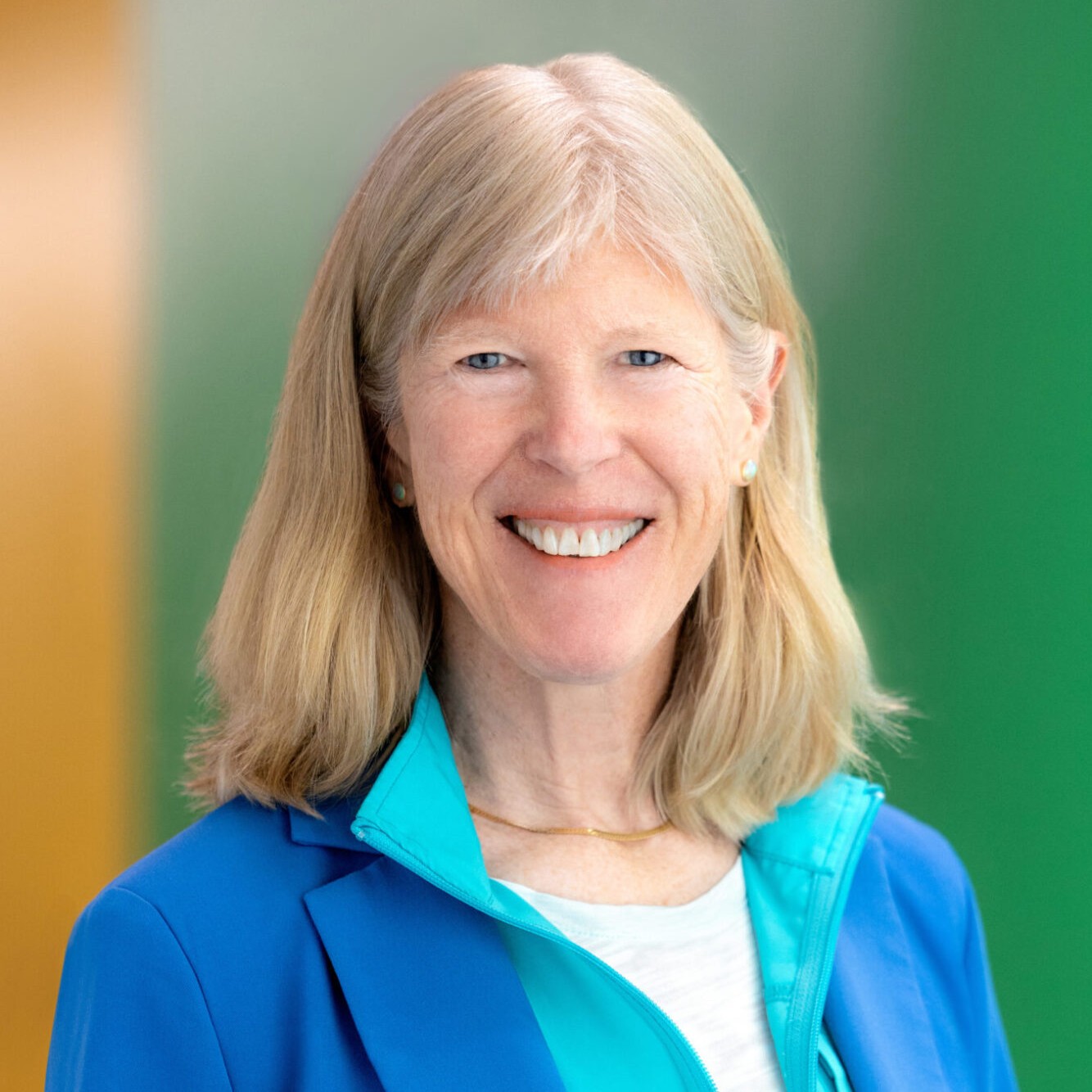
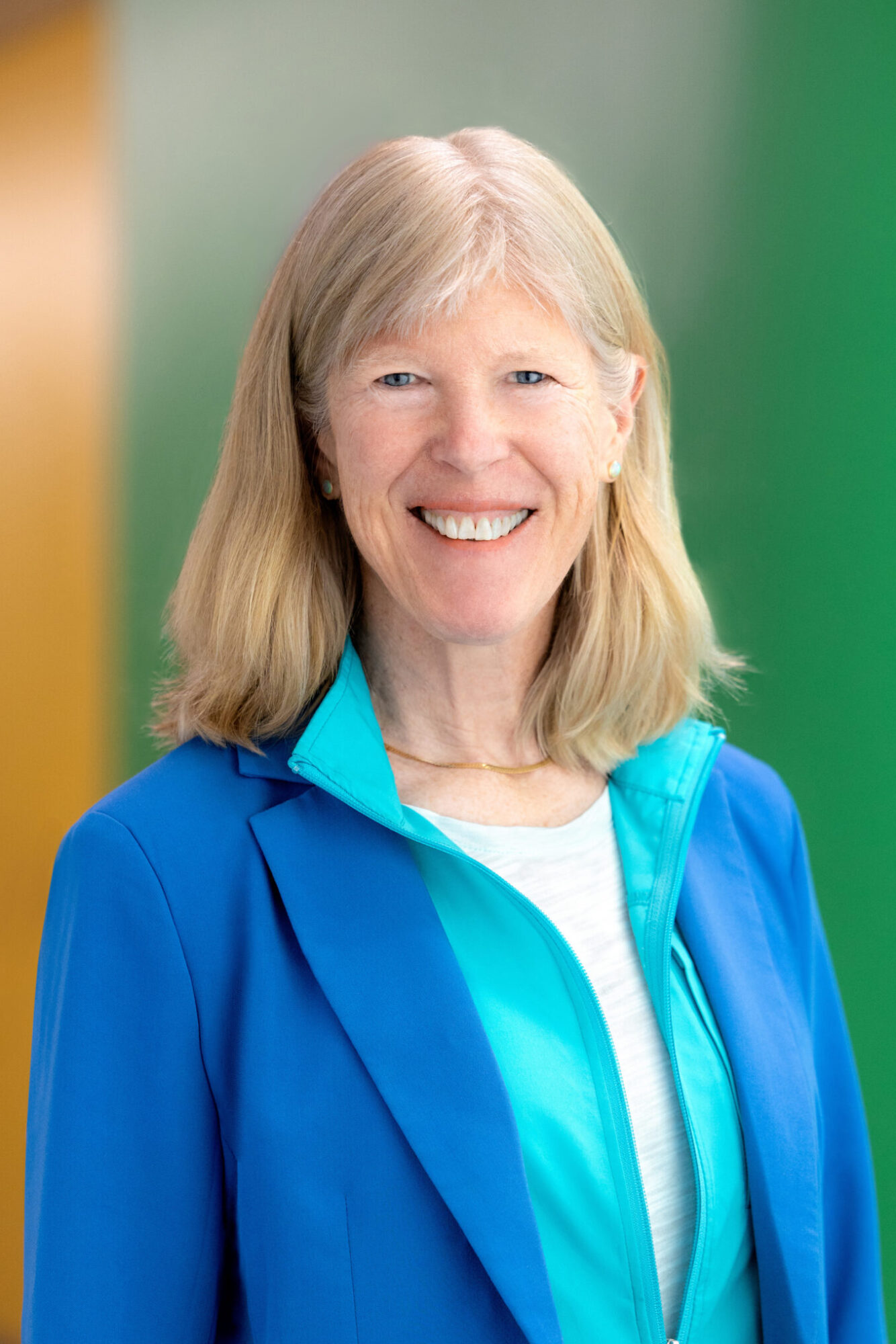
Cynthia Kenyon, PhD
Vice President of Aging Research, Calico Research Labs, Emeritus Professor of biochemistry and biophysics, UCSF
Cynthia Kenyon graduated valedictorian in chemistry and biochemistry from the University of Georgia in 1976 and received her PhD from MIT in 1981. She then did postdoctoral studies with Nobel laureate Sydney Brenner at the MRC Laboratory of Molecular Biology in Cambridge, UK. Since 1986 she has been a Professor of Biochemistry and Biophysics at the University of California, San Francisco. Dr. Kenyon is a member of the US National Academy of Sciences, the American Academy of Arts and Sciences, and the Institute of Medicine and she is a past president of the Genetics Society of America. She is now the Vice President of Aging Research at Calico.
TRANSCRIPT
Brianna Stubbs: Before we get going today, Eric and I would like to invite you all to take part in our very first question and answer session. We are going to sit down, answer your questions about aging, biology, research, translational medicine, whatever you can think of. Visit BuckInstitute.org/podcast and send us in your most difficult questions, then tune in for the answers on an upcoming episode. Now, let’s get on with the show.
Brianna Stubbs: This episode is presented by Ashton Thomas Private Wealth, guiding families and institutions with clarity today and strength that endures for generations.
Cynthia Kenyon: When you think about a worm, it seems like another world. But actually, the genes that it uses to be an animal are the same. And that means that you can study a little tiny worm that lives a couple weeks and doesn’t look anything like us and make a fundamental discovery that really changes the course of science.
Eric Verdin: Aging is evolving. No longer are we subject to forces beyond our understanding and control. We have charted the landscape and explored the frontiers of aging.
Brianna Stubbs: What was science fiction is close to becoming reality. Restoring sight, repairing tissues, reviving cells, organs, and maybe even our minds.
Eric Verdin: I’m Eric Verdin, CEO of the Buck Institute.
Brianna Stubbs: And I’m Brianna Stubbs, a scientist here at the Buck.
Eric Verdin: On this podcast, we dive deep into geroscience, studying the intersection of aging and disease with some of the brightest scientific stars on the planet.
Read more close
Brianna Stubbs: Join us, because…
Eric Verdin: …we’re not getting any younger… yet.
Brianna Stubbs: Hey Eric.
Eric Verdin: Hey Brianna.
Brianna Stubbs: How was your last podcast interview?
Eric Verdin: It was amazing. So, I had Cynthia Kenyon on.
Brianna Stubbs: Cynthia Kenyon, you know, just such a great in the field, the very first person I believe to show that aging could be regulated by our genes.
Eric Verdin: The second one, actually. Tom Johnson was the first one in Colorado, but nonetheless, she was the first one that actually identified a pathway that controlled the aging process and insulin signaling pathway.
Brianna Stubbs: I feel like with so many things in aging, it comes back to metabolism and insulin signaling being one of those most important central regulators of the way we age.
Eric Verdin: Yeah, what she certainly contributed is an amazing, completely new view of aging. When I was at UCSF, it just was a bomb that exploded in the whole field of aging in terms of the significance of what it means and the chance to talk to her and hear how this all happened was really unique.
Brianna Stubbs: And I know she uses the C. elegans worm model, right? Well, I use humans as a clinical model, so I’d be interested to see how what she’s doing relates to the clinical work that I do here at Buck.
Eric Verdin: It relates actually amazingly, and this is why, you know, I’ve been a big defender of all of these animal models. They’re important because what we’ve learned applies not only in the C. elegans worm but every species, including humans.
Brianna Stubbs: I really can’t wait to hear this one.
Eric Verdin: Enjoy.
Eric Verdin: Today I have the immense pleasure of speaking with someone who has truly shaped the field of aging science, Dr. Cynthia Kenyon. Cynthia is a Vice President at Calico, a member of the National Academy of Science, and she’s one of the true pioneers of what I call the modern science of aging. Now, Cynthia, you may not know this, but your early work at UCSF—where I had the privilege of being one of your colleagues nearly 30 years ago—was actually one of the key reasons I decided to pursue aging research myself. So, I want to start by going back to these early days. Can you describe for our audience what was the field of aging research like when you started?
Cynthia Kenyon: Well, it was very, very different at the time. The general idea was that aging just happened, you just wear out. People knew that different species age at different rates and different species differ by their genes, and if you think about it, that means that there have to be genes for aging. A lot of people didn’t really think about that, but they also thought that if there were genes for aging, there would be so many, there would be different genes for the skin and other genes for the heart; maybe there would be lots of genes with little effects, so even if there were genes for aging, you’d never find them. And so there was a basic idea that, you know, there’s nothing you could do about it.
Eric Verdin: Can you actually walk us through that first pivotal experiment? What was the spark that led to the identification of these mutations?
Cynthia Kenyon: Well, you know, it’s interesting, it’s a very interesting story. Like I said, the basic paradigm was that there wouldn’t be genes for aging. And yet, so I worked on a little tiny animal called C. elegans, which is a roundworm. It’s about the size of a comma in a sentence—very small. You can just barely see it with your eye and you can see it with a microscope. But they age really quickly and die in just about two weeks. So actually, it’s a nice little organism if you want to study aging.
So before me, a few other scientists had asked whether you could change genes and extend the lifespan of these animals. So the basic idea here is that if there are genes for aging—and there have to be because different species age at different rates—if there are genes for aging, you know, maybe there’s, you know, maybe there’s some genes that have a big effect maybe. Then if you change them, well, you could extend the lifespan of an animal.
I was previously involved in studies with C. elegans that showed that the ability of animals to generate body patterns, like arms and legs and things like that in certain places as they develop, was due to the presence of some universal master control genes that operated in all animals to make body patterns. Now, this is not something that you would think would exist. You could change these genes and a fruit fly would develop an extra set of wings, or the antenna would turn into legs. So you’ve got these huge changes in body pattern by making single changes in important master control genes.
So my idea was that there were master control genes for aging. Why not? All animals age, they do so at different rates, maybe there’s something like a thermostat for setting the temperature, except it’s kind of a thermostat for aging. So basically, you could turn it one way and shorten lifespan and the other way and lengthen lifespan, and the thermostat would work the same way in all species, but they would be set differently in different species. So some animals would age quickly, some animals would age slowly. So I came into this field with the idea that there really might be master control genes for aging—individual genes that if you change them, you could get a big effect.
And we found miraculously—it wasn’t miraculous, but we were very lucky to find early in our exploration—single mutations in single genes that doubled the lifespan of the animal and didn’t affect its eating—they were not calorically restricted—and it didn’t affect their fertility very much at all, like barely at all. And then we showed even that you could change these same genes when the animals were already adults and when they had already finished reproduction and you could still get them to live longer. So that was a big deal. Because that said there were individual genes that controlled the rate of aging, that aging was plastic, it wasn’t fixed in stone, and it could be changed, which was amazing.
And then later on, work from my lab and other labs showed that the genes that we had found in my lab to affect aging encoded very familiar kinds of molecular proteins—proteins that affect hormone signaling and the responses that cells had to hormones. So basically, what we’d found was that molecular biology that we already knew about and understood pretty well was controlling aging. So suddenly you could study aging and you could use the same tools that you’d already been studying it. One of the genes that we found that controlled aging was a gene called a transcription factor, which is essentially a gene regulator, which turns different genes in the DNA up or down. That gene was needed for the lifespan increase in these animals, so it was a very much of a program, if you will, like a computer program where you have regulatory genes, control genes, and you have a hierarchy of commands, you know, you have master regulators and then you have the effectors. It was amazing and it was controlling aging, which everyone thought just happened and was really boring.
Eric Verdin: And equally remarkable was the fact that you not only found one gene, but you found several, and these were organized in a pathway that normally works together in the cell—the insulin signaling pathway.
Cynthia Kenyon: Right.
Eric Verdin: And so from there, others were able to identify the same pathway in other model organisms, correct?
Cynthia Kenyon: That’s right. I mean actually, it’s very interesting. We published our paper in December, and the March before then, one of the leaders of the field of aging had written an article in Nature—which is a very prestigious magazine—saying there wouldn’t be genes that had big effects on aging, there couldn’t be. And this was a complete paradigm shift. And then in fact that same scientist studied fruit flies and she asked, “Okay, there are gene changes that affect this same hormone pathway in the fly, I wonder if they live longer?” And they did! And then other people asked the same questions in the mouse, and the mice live longer. That’s important because mice are mammals like we are.
So that’s important because it says that from evolutionary theory, it says that the ability of this hormone signaling pathway to control the rate of aging is ancient. It had to be up and running in a common ancestor, evolutionary ancestor that gave rise to the worm and these fruit flies and mice, and that same common precursor also gave rise to humans. So, and we know that the insulin signaling pathway is active in humans; what we don’t know is if it controls aging. We think probably it does, but we don’t know that for sure.
Eric Verdin: I agree with you and in some ways you know about the ITP, the Intervention Testing Program that the NIH runs, which actually has identified drugs that increase lifespan in mice. And there’s a remarkable number of drugs that target insulin and glucose/sugar metabolism in those, including Acarbose, SGLT2 inhibitors, and of course now we are hearing a lot about Ozempic and the GLP-1 agonists which are emerging as potential anti-aging drugs. So this must be an incredible validation for you of all of that work.
Cynthia Kenyon: It is. So basically, I think it’s important to get the general concept, and it’s not intuitively obvious, really. So basically these hormones, the hormones that we identified with others as controlling aging were hormones, the hormones insulin and another one called IGF-1, which stands for insulin-like growth factor number one. And I know you’ve all heard of insulin because if you don’t have enough of it, you get diabetes, or if you’re resistant to it, you also get diabetes. So that’s very important and that’s associated with having a lot of sugar in your body—Type 2 diabetes, anyway. Those genes are involved in sugar metabolism and allowing your body to take up sugar after you eat a meal. IGF-1 is involved in promoting growth, but they’re very closely related pathways.
And basically, you know, during a normal life in a happy situation, you have enough to eat, you’re eating, you’re growing well, you reproduce, your children grow, everything is fine. And what the work on these worms showed was that if you slightly inhibit the pathway, so it doesn’t work quite as well—it works, but not quite as well—what it does is it gives the body a danger signal. It says, “Uh-oh, maybe there’s not enough food out there,” or maybe there’s some other bad condition like temperature, irradiation; there’s other conditions that will do it also. And what the animal does is it rolls out a very large, kind of system-wide, pervasive resiliency response. So suddenly the same animal is protected against a lot of different stresses. It makes the proteins that it makes fold better, they last longer, they’re, you know, they’re more resistant to, you know, oxidative damage, reactive oxygen species, all these horrible things that you’ve heard about.
So basically, what when we extended the lifespan of these worms, we didn’t really know what we were doing, we just looked for gene changes. The animal did it all by itself. All we had to do was change one gene, but the animal sort of knew how to do it. And what it was really doing was to activate this danger system and trigger a response to a danger that really didn’t exist. It thought it existed, but everything really was fine. And so out came this response, and consequently the animal could live twice as long. So that’s really important because that’s why inhibiting it a little bit can have this beneficial effect. If you inhibit it completely, you die—we need insulin, we need IGF-1.
When you eat a meal, your level of glucose or sugar rises, and that causes insulin to increase, which causes the sugar to be taken up into your cells. If there’s too much sugar, then the cells say, “Hey, give me a break,” and they sort of close the door and they become resistant to insulin, and that’s what causes Type 2 diabetes. Okay, so basically one of these drugs, Acarbose, prevents the body from taking up glucose, so you keep your glucose levels low and the animals live longer—the mice live longer. SGLT2 inhibitors—or inhibitors of that, which is a diabetes drug—they… so normally what happens when you eat sugar, your body wants to keep it inside you, it thinks it needs it. So it goes into the kidneys and the kidneys say, “Oh no, you’re sugar, you don’t go out, you stay here.” So it has a special protein that keeps it in and this keeps it from being just excreted in the urine. And what this drug does is it blocks that mechanism, so now when you eat meals that have sugar in them, the sugar leaves your body through just urination, and so the level of sugar in your body is lower, so you have lower levels of insulin and as a consequence at least if you’re a mouse, there are big benefits. And actually even in humans there are a lot of benefits of SGLT2 inhibitors—it benefits diabetes but other conditions as well.
And also famously sort of these GLP-1 receptor agonists, like Ozempic and Wegovy, those just cause you to eat less, but actually you also sort of change your taste preferences apparently so that you don’t really want all that sweet food. And again as a consequence you’re protected against diabetes, but a lot of other things also like fatty liver disease, cardiac problems; I mean people are… there’s emerging evidence of neurodegeneration and addiction—all sorts of… the biology isn’t really completely known but there’s a lot of things get better and it’s all probably part of this same system that I was talking about—how having too much sugar is not good for you.
(Commercial Break)
Eric Verdin: There’s a lot of discussion right now in terms of research and what it should focus on, and there’s a lot of interest in translational research that is bringing basic discoveries to humans. But I’ve always made the case that the true importance lies in making the early discoveries, such as you did, because it essentially opened up the gate to discoveries in humans. So can you speak about the importance of basic research in model systems such as the worm or mice or fruit flies, which are so appear to be so different from us at first sight, but when you look at the core mechanism, the core pathways that regulate aging, they’re actually conserved all the way from the little worm to humans?
Cynthia Kenyon: This is an incredibly fundamental question and it’s a little bit counter-intuitive. When you think about a worm, it seems about as different as a person as it could get. I mean people, when they even see other kinds of people, they think, “Oh, they’re so different from each other.” People against people. But against a worm, it seems like another world. But actually the factor of the matter is that in order for an animal to be alive and go about its daily business, it has to have a lot of the same things that a person has. It has to have a functional intestine, functional muscles, neurotransmitters, you know, it has to have a functional nervous system. And it turns out that the genes that it uses to be an animal are the same as the genes that we use. Even though we think they’re so different, they’re actually much more similar than they are different. And that means that you can study a little tiny worm that lives a couple weeks and doesn’t look anything like us and make a fundamental discovery that really changes the course of science.
People are all over the world are trying to figure out how to slow down aging in people; what’s more important, keep us functional and happy as we’re getting old—healthy as we’re getting older. I think now we can see that it’s possible and the reason was because of curiosity-driven basic science, really.
Eric Verdin: Yeah, and so studying this little worm has a number of really key advantages. First, I mean the research is much cheaper; it lives 21 days and so it allows a complete manipulation of the genetic code and allows us to do many things way faster. And so they are really thought as an accelerator of the whole research enterprise. And I think we all know, you know, that C. elegans, the little worm, helped us to make so many fundamental discoveries that are making their way into medicines today. So I think it’s a really strong argument from my point of view for the support of basic research and the enthusiasm that we have here at Buck and many other places in studying these organisms.
So, so this is great, this is what happened then, and without exaggerating, I think it really ushered in modern aging research and we are now, you know, 25, 30 years later seeing all of these discoveries moving into humans. So a few years ago—I don’t remember, I think it’s about 10 years ago—you made a pretty gutsy transition, that is you left the temple of academia to go to the dark side and work for industry. At least this is how many academics refer to it. Can you tell us, and I was really admirative when you made that transition, and I would love to hear, after making such a fundamental observation, you made a big move to Calico, which is now one of the Alphabet companies associated with Google. Why did you make that transition?
Cynthia Kenyon: When I started out as a young professor and even as a postdoc in my training, you know, I just really wanted to understand how body patterns were made, you know, why the head was different from the rest of the body, where the limbs went, and so I studied this and we learned a lot about it. But I never it never made me really want to go into industry or start a company. I did think it would be nice if people could fly if we could grow wings—this occurred to me—but that was a little bit ahead of its time, still is.
But anyway, then we made our discovery about worms, and I sat there and I looked at these worms, and it was at a time in their life when the normal worms were about two weeks old and they were almost all dead and the ones that weren’t looked like they were on their deathbed. And then right next to it was another one of these little worm homes that contained the long-lived mutant. And those worms were just moving around, looking young, and my hair stood up—they still stand up, they’re standing up right now—every time I think about that, because they should have been dead. The fact is they should have been dead but they weren’t dead, they were alive and they were still young. And I looked at that and here’s what I thought: Number one, gee I feel sorry for the old worms that are all dying—I still feel sorry for them. Then I thought, “Oh my God, that’s going to happen to me.” Then I thought, “I want to be those other worms.” And then I thought, “I want to start a company!” So like within minutes, I wanted to start a company.
And then in about the year 2013 or so, I saw the magazine, Time magazine, people said to me, “Cynthia, have you seen Time magazine?” and I said, “No,” and they said, “Well look at it, it says something like ‘Can Google Stop Aging?'” Well, I loved Google, I thought Google was just the coolest thing, smartest people, just a great company, just the state-of-the-art computation and intelligence and ingenuity. And they were going to start a company that was going to focus on aging, and the CEO was going to be Art Levinson, who’s an absolute hero of the biology world, he was a leader at one of the very best and earliest biotech companies called Genentech, and he was a legendary. And he was going to be the CEO of this company and they were going to study aging. And I thought, “Gee, I could go to this company and I could recruit like super great talent, really smart people, they would all be working on aging, and it would just be a thrill and I could contribute because I actually know a lot of details about the molecular biology of aging.”
And by that time, it was known that you could extend lifespan not just by changing this insulin IGF-1 system. You could also do it, or you could make animals a lot healthier if you put young blood into an old animal, for example, if you cleared—there’s certain cells called senescent cells—which accumulate with age and those are very highly inflammatory cells and Judith Campisi’s lab at the Buck had already shown that if you clear those cells, if you kill them, mice are way healthier, and they have a longer mean lifespan. So there are all sorts of ways that you could slow down aging, it wasn’t just one way, many different ways. So I just thought, “Oh my God, this is so good.” And I don’t think it was the dark side, I think it was bursting through into the light, you know, to actually do something that could help humans. Which isn’t to minimize basic research—it would never have happened without basic research. So I just thought, “Oh my God, something’s going to work, I’m just going to I’m just going to have this great time and try to try to like figure it out, help figure it out, how to how to bring it to humans.” And it wasn’t just me, I knew that there were many people working on it but it was the best way I could think of to sort of speed it up.
Eric Verdin: What has the journey been like for you of moving into a translational, mission-driven organization focused on aging?
Cynthia Kenyon: Oh, it’s great. So first of all, Calico is a very interesting company because it’s basic research still plus translational work—in other words, drug development. That’s the first thing. The second thing is Calico doesn’t only try to slow down aging, they also make drugs for age-related diseases like cancer and other diseases. So it’s kind of a it’s a company that does many different things, which is really wonderful because all of these different units sort of synergize and make a very rich environment for for identifying translational targets for aging and trying to target them with drugs to cure diseases and hopefully slow down aging while we’re at it. It’s really a thrill, I love it.
Eric Verdin: The field of aging in general, I think as I see it, is divided into two broad tendencies. One is the rigorous sort of biotech approach—sort of Altos and Calico and BioAge who are really looking for FDA-approved drugs. And then there is, in parallel to this, a whole world of proliferating world of supplements, of people taking the situation in their own hands. I know we’ve had these discussions in the past, I would love to hear your thoughts on what these two worlds mean, the danger of one versus the other, and how what is the best way that we could actually bring all of this knowledge to humans and to the public?
Cynthia Kenyon: Yeah, that’s a great question. I mean there are all sorts of, you know, either drugs that are off-patent and are easy to get, like Rapamycin, Metformin, there are probiotics, there are compounds found in wine called Resveratrol, there’s something called taurine, there are all these different precursors of NAD, all of which in studies in the laboratory have been shown to have benefits on the biology of aging in animals. And a lot of those are very cheap and easy to get, and people take them. But the problem with it is that they don’t know—there’s two things they don’t know. One thing they don’t know is whether there’re going to be side effects if you keep taking something for a long time. And the other thing they don’t know is if they’re going to really work. And the only way to really know that is to do a large—what we would call in the world of drug development in a pharmaceutical company—a Phase 3 trial, a large trial, the kind that were done for Ozempic, for example, for these GLP-1 receptor agonists, for example, very large trials where you lots of people and you have one group that takes a placebo, doesn’t really get the drug, and the other ones that do get the drug or the intervention, then you compare how they’re doing. And the problem with that—that is what people in industry are doing—and it’s not what people in the supplement world are doing.
And the reason is that it costs a lot of money. It can cost between 500 million and even a billion dollars to do one of these trials; it can cost a lot of money. In order to do that, you have to spend the money up front, and then your trial will probably fail because most trials fail, but occasionally one doesn’t fail, and then you have to sell it in order to forget making a profit for a while, you have to actually just get your expenses back. Then you can make a profit. And if your aspirin is something for example that has been shown to extend the lifespan of the mice a little bit, believe it or not—aspirin. So what if you showed that aspirin increases the lifespan of people, what are you going to do, try to compete with Bayer and make aspirin? It’s just not going to happen. You can’t get your money back.
So I think that we really need something that I like to call the World Healthspan Organization. Kind of like the World Health Organization except for healthspan, which means how healthy you stay as you age. Where lots of governments and nonprofits all chip in all around the world and they design, carry out, and fund these studies so that we can find out if some of these really are beneficial. And the there’s a huge benefit to that if we figure it out, then people can take them and everyone can take them—they’re cheap, that’s what these things don’t I mean that’s the upside is they’re cheap. You could give them to very poor people in all countries, to anybody, rich people, poor people, and they would make you more resilient, they would make you probably more disease-resistant, and just increase your health as you age.
And actually there’s a real need for it now because, you know, we have this demographic inversion that you’ve all heard about where there’s more old people than young people—or a growing number, a growing proportion. So it’s really important to keep these aging people productive and healthy for a longer time, just economically to say nothing of the happiness. So I really think this is a great thing but it’s a real problem, meanwhile people are just taking all sorts of things and combinations and they don’t know.
Eric Verdin: I agree, it seems that there are a lot of low-hanging fruits that are not being tested rigorously because of pure economic reasons and that this is one area where governments, with all the benefits that the government would accrue from a life-enhancing drug or supplements to bring to the population. So I love your idea of having or creating some kind of consortium where all of humanity would participate. So this is a really cool idea. So, what do you do personally to stay healthy and maximize your longevity? What’s your daily… I’m not going to ask you about your daily routine specifically, but anything specific that you want to share with our audience in terms of what you think is important to focus on?
Cynthia Kenyon: Well, all right. So what you always hear is diet, exercise, sleep, and social connection. Those are the things you hear about all the time and I think they’re probably all true. So diet is interesting because you you have to make a choice. We know, I know that we don’t know what the best diet is for sure. But it doesn’t matter, you have to eat something, so you have to just make your best guess. And we did an experiment years ago where we gave our little C. elegans worms some sugar, which is, you know, remember that’s what insulin responds to, so that’s something that would affect our lifespan circuitry that we discovered in the worm. Anyway, turns out if you give them sugar, they live shorter, and we did some experiments and we found out that what was happening is that instead of turning this pathway down a little bit—which could double its lifespan—we were turning it up! So we were doing the same thing that would happen if you ate a diet that’s very high in sugar, which makes you insulin-resistant and shortens gives you all these diseases and shortens your lifespan. So the day we got that result, I had heard about this diet called the Atkins Diet—someone had told me about it a few months earlier. So I remembered Atkins. So I went to the bookstore and I got the book on the Atkins Diet, and then of course I got books on the South Beach Diet and all these other diets—Mediterranean diets of all sorts.
And I started eating that way. So basically what I did was I stop eating food that would turn into sugar quickly. That means food that has what they call a low glycemic index. So I started eating that so it means no potatoes, no white food essentially—no rice, no potatoes, no bread—I stopped eating all that. Lots of salad, lots of nuts, some fruit, lots and lots of vegetable, eggs, you know, some poultry, fish, sauces of all sorts. And I’ve been doing that since 2002. So it’s very it’s actually quite extreme and I really do it. People are always laughing at me because I will eat pizza but I just eat the top and I throw away the crust. It’s kind of embarrassing, but anyway that’s what I do. I also exercise, especially lifting weights and doing aerobic exercise. Those are the two main things that I do.
Eric Verdin: Very cool. I think what you’re describing is in essence a ketogenic diet…
Cynthia Kenyon: It’s not ketogenic. I’m not extreme enough that I’m in ketosis. I’m just not eating a kind of ultra-processed, I mean it’s like the total opposite of ultra-processed food. It’s a simple kind of a more, but it’s not I’m not in ketosis. And I know what that feels like because when I started I was in ketosis—I got these little strips you can test your urine and I know what that feels like. It’s like your urine is like a fire hydrant, that’s the way it is. But I’m not there. However, there are ketogenic diets and apparently they’re pretty good for you but I don’t really know that just from studies that have been done.
Eric Verdin: What do you think is going to be normal for us in 10 years in terms of maximizing our age? If you had to to tell us what are we all going to be doing 10 years from now?
Cynthia Kenyon: Well, it’s pretty simple I think. We’ll still be trying to eat well, hopefully we’ll have a better idea of what really is the best food to eat. We’ll trying to be getting enough sleep, getting enough exercise, having good social connections—we’ll still do that. And maybe we’ll be taking something, maybe there’ll be something that we can eat or inject or something that will actually, you know, intervene in some of these genetic control circuits for aging—the same circuits that make different species age at different rates. Maybe we’ll make our dogs live longer, you know, maybe that will be routine. There are companies trying to do that actually and that could that could happen.
Eric Verdin: One idea of these companies is that they’re going to they’re going to allow us to test some of these drugs in some of our closest you know relative our pets and I know we all know about Loyal, correct?
Cynthia Kenyon: Yeah, there’s a company Loyal, and it’s run by Celine Halioua, and they’re testing… so it turns out that large dogs have very, very high levels of IGF-1. That’s this hormone that we said can speed up aging and large dogs have very short lifespans, they age very quickly. And so she has a bunch of different interventions that should lower the level of IGF-1 in these dogs. And the people are bringing their dogs in, they’re in trials right now, and hopefully hopefully the animals will age more gracefully, maybe live longer, but have fewer diseases, be healthier as they age. It should should be the case. Actually there are mutant dogs that have gene changes that lower the level of IGF-1, those dogs are small and they live very long—they can live to be like 18 years old—whereas these big Great Danes, for example, only live to be seven years old. So it’s really quite remarkable and it’s all apparently largely IGF-1 based. So that’ll be interesting and it’ll also, I don’t know what it would say about people, but it will be very interesting. You know, it’ll if it’s true in dogs it just makes it even more exciting to think about it in people.
Eric Verdin: I agree, so from the worm to the dog to human. I think that’s the pathway that we all hope will come to realize and, you know, for the benefit of humanity at the end. Thank you so much for joining me today, I think your work continues to inspire generations of young scientists and as we’ve heard holds enormous promise for the future of human healthy aging. And I’m truly grateful for the chance to share your story, your science, and your vision with our audience and I can’t wait to see what the next decade will bring from Calico, from your lab, and from this extraordinary field that you helped to create.
Cynthia Kenyon: Well thank you so much and thank you for having me, it was great to see you.
Eric Verdin: My pleasure, same here.
Brianna Stubbs: Thank you so much for listening. Please subscribe, share, and give us a five-star review on Apple, Spotify, or wherever you get your podcasts.
Eric Verdin: We’re Not Getting Any Younger, Yet is produced by Vital Mind Media, the Buck Institute’s very own Robin Snyder is the executive producer. Wellington Bowler is right next to us here directing the recording and the esteemed Sharif Ezzat weaves the show together for you.
Brianna Stubbs: If you’re listening to this podcast, you know that there has never been a more exciting time in research on aging. Discoveries in the lab are moving into the clinic to help us all live better longer. The Buck Institute depends on the support of people like you to carry on our breakthrough research. Please visit BuckInstitute.org to learn more and to donate.
Brianna Stubbs: This episode was sponsored by Ashton Thomas Private Wealth, where discipline shapes vision and vision builds legacy. Learn more at ashtonthomaspw.com.